
Sewer Line Cleaning and Root Removal on Clay Laterals
Clay drains north to a plant inside its own town line rather than south to Metro. When a whole street loses its drains, that changes who should be called and who should be paid.
Sewer Line Cleaning quote in Clay
Share a few details so we can confirm coverage and arrange the right next step.
Would you rather talk it through? Call (315) 640-3590, answered 24/7.
$100 off your first job
Credited by us on your first booked job.
- One credit per customer per property, on your first booked job.
- Valid through December 31, 2026.
Mention this offer when you book. Full terms.
Oak Orchard since 1981, and why roots need a defect first
The Oak Orchard Wastewater Treatment Plant at 4300 Oak Orchard Road in Clay, operating since spring 1981, serves a large section of the Town of Clay as well as portions of the Town of Cicero and the Village of North Syracuse through a network of gravity sewers and pumping stations. It replaced the Davis Road Treatment Plant, which had discharged low-quality water and become a public hazard and is now a pump station.
Source: Onondaga County Department of Water Environment Protection, accessed 2026-09-08
WEP states that tree roots are naturally inclined to grow toward moisture and that a sewer line gives them all the moisture they need, that roots can intrude and then continue to grow and multiply until they clog the sewer pipe, and that they can eventually crack it. The department's advice is to be mindful of where the sewer line runs before planting.
Source: Onondaga County Department of Water Environment Protection, accessed 2026-09-08
Section P3005.2.3 of the New York residential code requires that the junction of the building drain and the building sewer be served by a cleanout at the junction or within 10 feet of developed piping upstream of it. Section P3005.2.2 requires building sewers smaller than 8 inches to have cleanouts at intervals of no more than 100 feet, and section P3005.2.4 requires a cleanout where a building drain or building sewer changes horizontal direction by more than 45 degrees.
Source: 2020 Residential Code of New York State, Section P3005.2, via UpCodes, accessed 2026-09-08
North to Oak Orchard: what a pumped basin means for your lateral
When every drain in a Clay house slows together, the pipe to open is the lateral, but the first question is whether the trouble is even on your land. The Oak Orchard Wastewater Treatment Plant at 4300 Oak Orchard Road sits inside the town and has served a large section of Clay, along with parts of Cicero and the Village of North Syracuse, since spring 1981 through a network of gravity sewers and pumping stations. It replaced the Davis Road plant, which is a pump station now. A pumped network can lose capacity without a single thing being wrong in your yard, so a street that goes quiet together is a county call and a house that goes quiet alone is a cleaning.
Roots, grease or capacity on a Clay main line
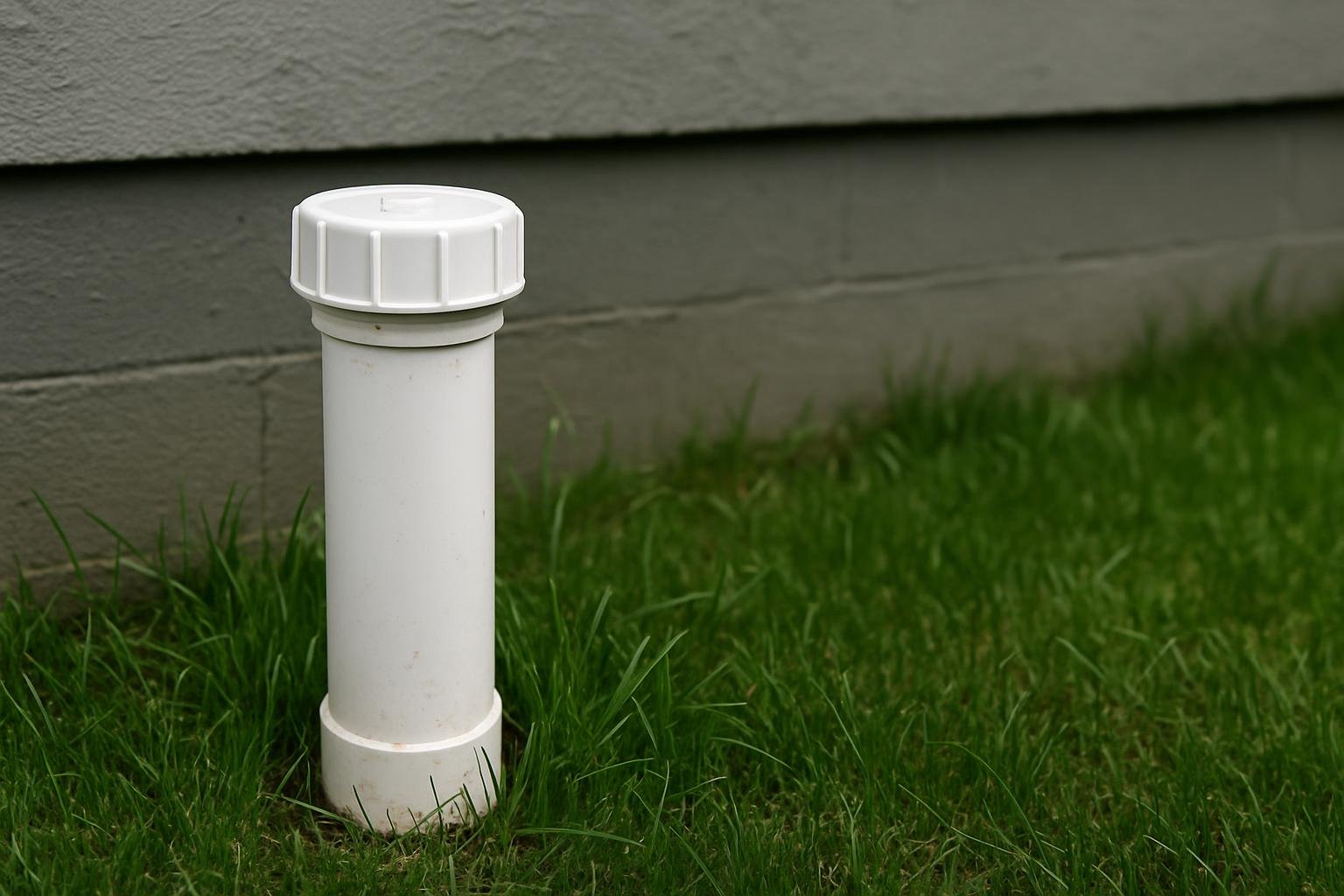
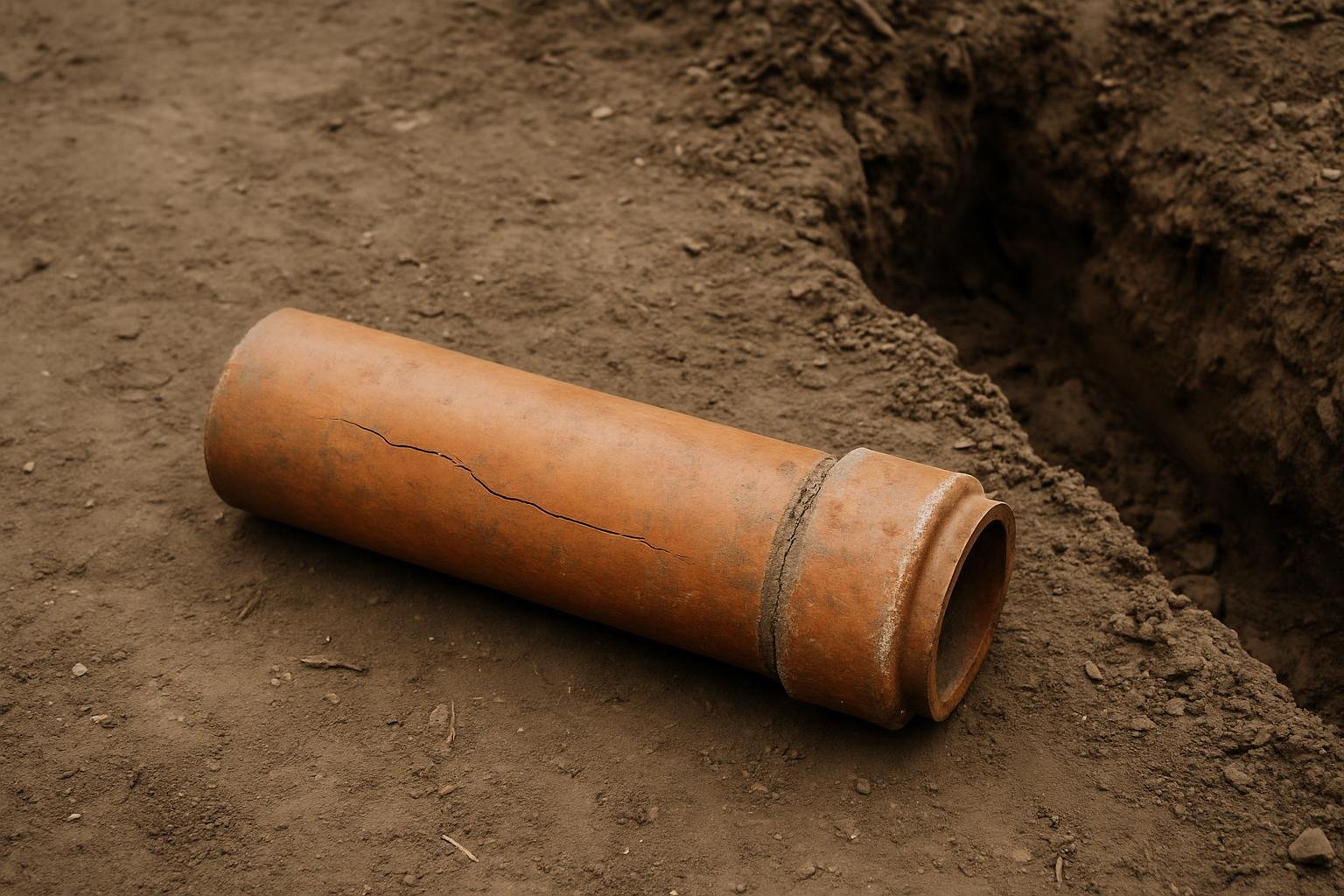
Weigh whether this is one house or several, then weigh the cause. Roots are worth understanding rather than assuming: the county describes them growing toward moisture, finding it where a pipe leaks, then multiplying until they clog it and eventually crack it, which means a root finding is really a defect finding. On the town's younger plastic runs there are fewer joints for that to happen at, so grease and fibrous material are the more common culprits. Weigh access too, since the state code expects a cleanout at the junction of the building drain and the building sewer or within ten feet upstream, at intervals no greater than a hundred feet, and at every change of direction over 45 degrees.
One house or the whole street
Clay is a pumped system feeding Oak Orchard rather than a gravity run to Metro. If the street is slow together, the call that matters is to the county and it costs nothing.
A root is evidence of a leak
Roots grow toward moisture and enter where the pipe already leaks. So the question after a root cut is which joint let them in, and whether that joint is worth repairing now or watching.
Check where the line can be entered
The code wants an access point at the building drain junction or within ten feet, again every hundred feet, and at any turn over 45 degrees. If yours has none, fitting one is cheaper as planned work.
Is it your house or your street?
Tell us what the neighbors are seeing and we will say whether this belongs to the county or to your lateral.
Other lateral and root work we arrange in Clay
What Clay owners ask when every drain slows at once
Where does a Clay sewer actually go?
Mostly north, to the Oak Orchard Wastewater Treatment Plant at 4300 Oak Orchard Road inside the town, which has served a large part of Clay along with portions of Cicero and the Village of North Syracuse since spring 1981 through gravity sewers and pumping stations. Part of the town drains instead to Wetzel Road in Liverpool. Neither route is Metro.
Do plastic laterals get roots in Clay?
Less often, and for a specific reason. Roots do not drill into sound pipe, they follow moisture to a defect and then expand inside it. A plastic run with solvent welded or gasketed joints simply offers fewer entry points than mortared clay does, which is why on this town's newer stock grease and fibrous material are the more usual finding.
Tell us what the Clay lateral is doing
Send your ZIP code and what you are seeing. There is no obligation, and if this is a clean rather than a dig we will say so.