
Syracuse and the surrounding New York area
Syracuse Drain Cleaning, Sewer Lines and Basement Backups
Find out whether this is a blockage to be cleared, one failed joint to be repaired, or a pipe that was never yours to fix. A camera down the line settles that before anyone quotes, because most blockages are cleared rather than dug up, and because the curb line decides who pays for the ones that are not. Tell us which fixtures are slow and your town, and we will put you in front of licensed, insured contractors who answer it in writing.
Request a Quote
Share a few details so we can confirm coverage and arrange the right next step.
Would you rather talk it through? Call (315) 640-3590, answered 24/7.
$100 off your first job
Credited by us on your first booked job.
- One credit per customer per property, on your first booked job.
- Valid through December 31, 2026.
Mention this offer when you book. Full terms.
Four jobs, and the fixtures tell you which one you are in
Which fixtures are slow sorts people faster than what the blockage turns out to be. One sink backing up while the rest of the house drains is a branch line inside the building. Every fixture slowing at once, or the same line blocking a second time, is the lateral running out under the yard. Wastewater coming up through a floor drain right now is a third thing and it is the one to call about first. And if somebody has already told you the line needs replacing, the fourth is where that gets established before you commit to anything.
Clogged and Slow Drain Cleaning
Get one slow or blocked fixture running again, and find out whether the fault stops at that fixture or carries on out to the street.
Start here if one sink, tub or toilet is slow or blocked and the rest of the house still drains.
About Drain Cleaning →Sewer Line Cleaning and Root Removal
Clear the one pipe that carries the whole house out to the street, take the roots or the grease out of it, and establish where along that run the blockage actually sat.
Start here if the whole house drains slowly, or the same line has blocked more than once.
About Sewer Line Cleaning →Sewer Backup and Basement Flooding
Get the line open and the house draining again, then establish whether the water came from your own lateral or from the system in the street.
Start here if wastewater is coming up through a floor drain, a tub or a toilet right now.
About Sewer Backup →Sewer Line Inspection and Repair
Find out what is actually wrong with the lateral, how far along the run it sits, and whether the answer is a cleaning, a spot repair or a replacement.
Start here if somebody has told you the line needs replacing and you want that established before you commit.
About Sewer Line Repair →Not sure which one you need?
Describe what you are seeing and we will tell you what the job actually needs.
How a drain job starts here
Tell us which fixtures are slow, and your town
Those two answers do most of the sorting. One slow fixture is a branch line inside the building; every fixture slowing together is the single pipe running out under the yard. The town matters because Onondaga County Water Environment Protection states that the City of Syracuse has a combined sewer system, sewage and stormwater in one pipe, while every other municipality in the county has separate storm and sanitary sewers.
Someone opens the line, then looks down it
Clearing the blockage gets the house draining again. A camera run from the cleanout toward the main is what says why it blocked: the pipe material, the state of the joints, anything holding water, and how far from the house the fault sits. That distance is the number the rest of the decision turns on.
You get the location before you get a price
A fault marked on the ground above it is a quote you can check. Section 5.3 A.3 of the Onondaga County Examining Board for Plumbers requirements has lateral repairs reconstructed out to the curb line, and an obstruction the contractor cannot clear that sits under the street bed is one they are required to take to the City sewer department instead.
What makes this a local problem
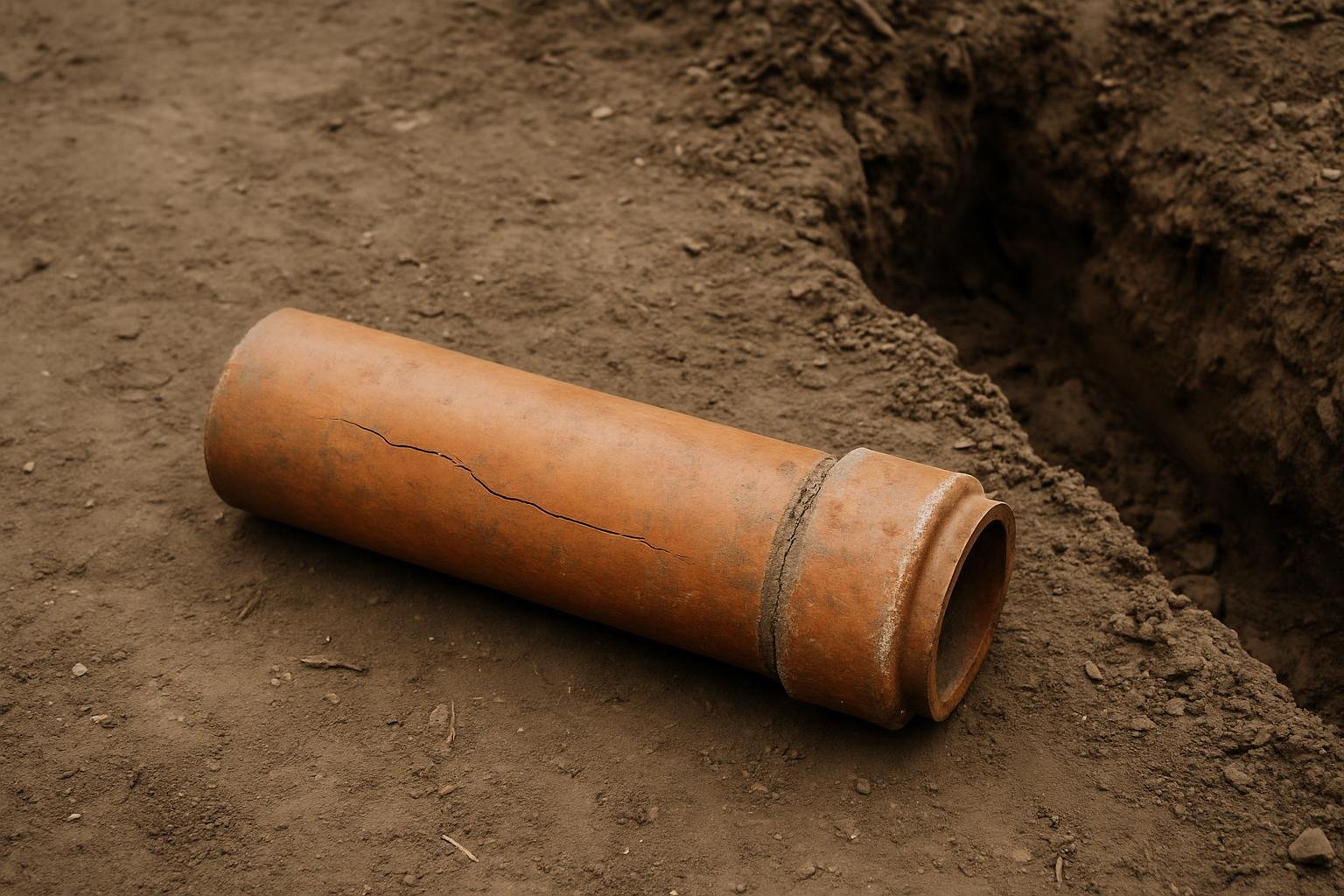
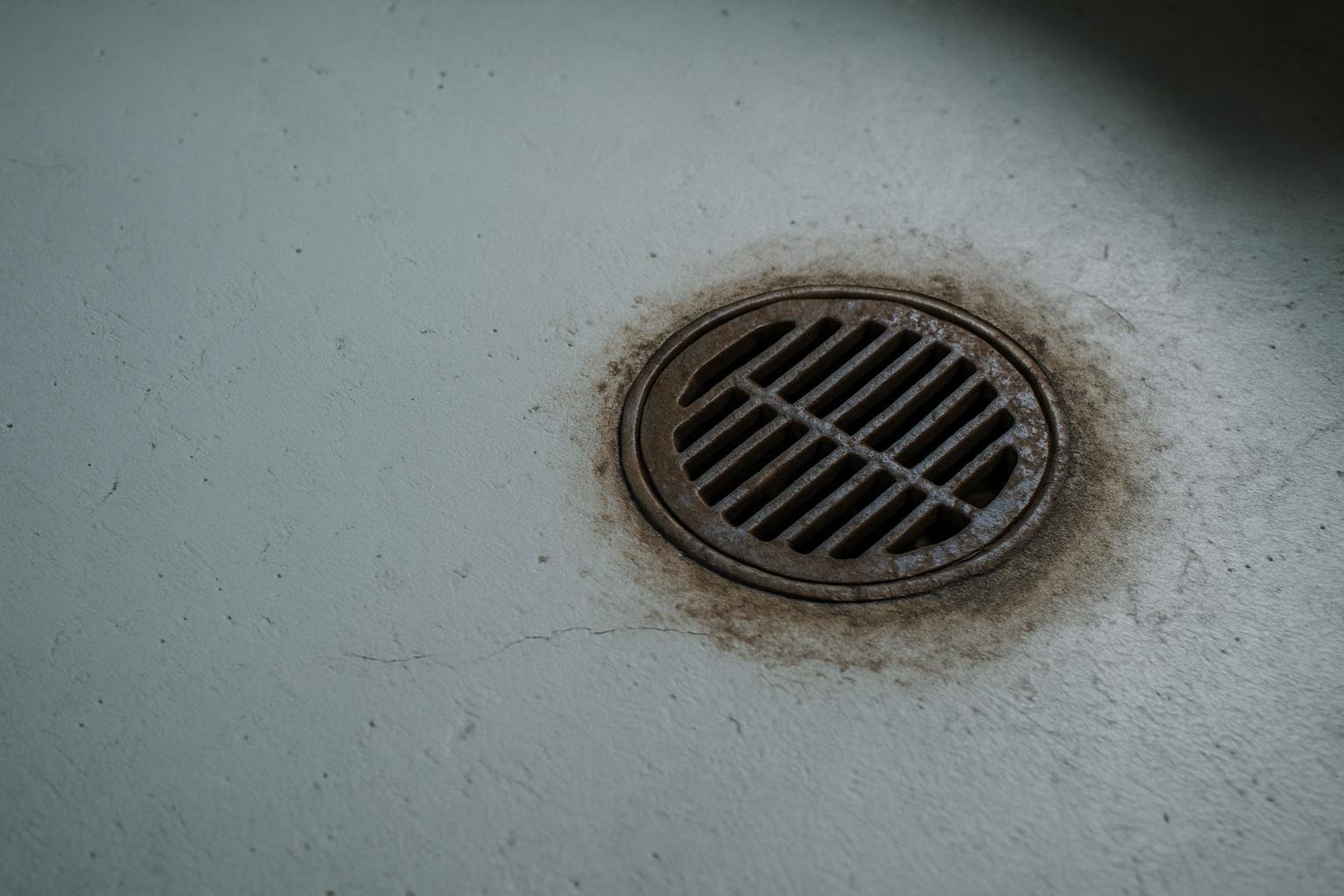
WEP states that in Onondaga County the City of Syracuse has a combined sewer system, in which sewage and stormwater share a single pipe, while other municipalities have separate stormwater and sewer systems. During heavy rainfall or snowmelt the volume can exceed the capacity of the combined system, and combined sewer outfalls discharge the surplus into local tributaries.
Source: Onondaga County Department of Water Environment Protection, accessed 2026-09-08
Onondaga County Water Environment Protection answers a 24 hour line on 315-435-3157 for properties inside the Consolidated Sanitary District, and its crews inspect the public side of the sewer, which it describes as running from the sewer cleanout or vent pipe, the mushroom cap, in your yard out to the road and into the public sewer. If the fault is not in the public sewer the department refers the property to a licensed plumber or drain service. There is no direct charge for the visit and the homeowner does not need to be present.
Source: Onondaga County Department of Water Environment Protection, accessed 2026-09-08
The EPA's own analysis of sanitary sewer overflows states that more than 70 percent of the overflows studied were attributed to line or main breaks or to line blockages, that most breaks were reported in old pipes, and that of the line blockages reported the most common cause was buildup of oil and grease with tree root intrusion the second most important cause. It adds that systems not routinely cleaned and repaired experience more frequent clogged and collapsed lines from root growth and from accumulated debris, sediment, oil and grease.
Source: US Environmental Protection Agency, Sanitary Sewer Overflows case study, accessed 2026-09-08
Share of housing built between 1940 and 1969, the years bituminized fiber sewer pipe was in production under federal Commercial Standard CS116, in the places of Onondaga County: Fairmount 72.3 percent, Seneca Knolls 71.8, Westvale 71.2, Galeville 70.6, Mattydale 65.4, Nedrow 59.1, Lyncourt 56.1, North Syracuse village 55.3, DeWitt hamlet 51.9, Fayetteville village 45.4, Manlius village 44.3, Lakeland 40.7, Solvay village 39.9, Camillus village 38.1, Marcellus village 35.3, Syracuse city 33.4, East Syracuse village 33.1, Minoa village 29.5, Liverpool village 29.3, Baldwinsville village 22.2 and Skaneateles village 20.8.
Source: US Census Bureau, American Community Survey 2020-2024 5-year, table B25034, accessed 2026-09-08
When a slow Syracuse drain is not a sewer line at all
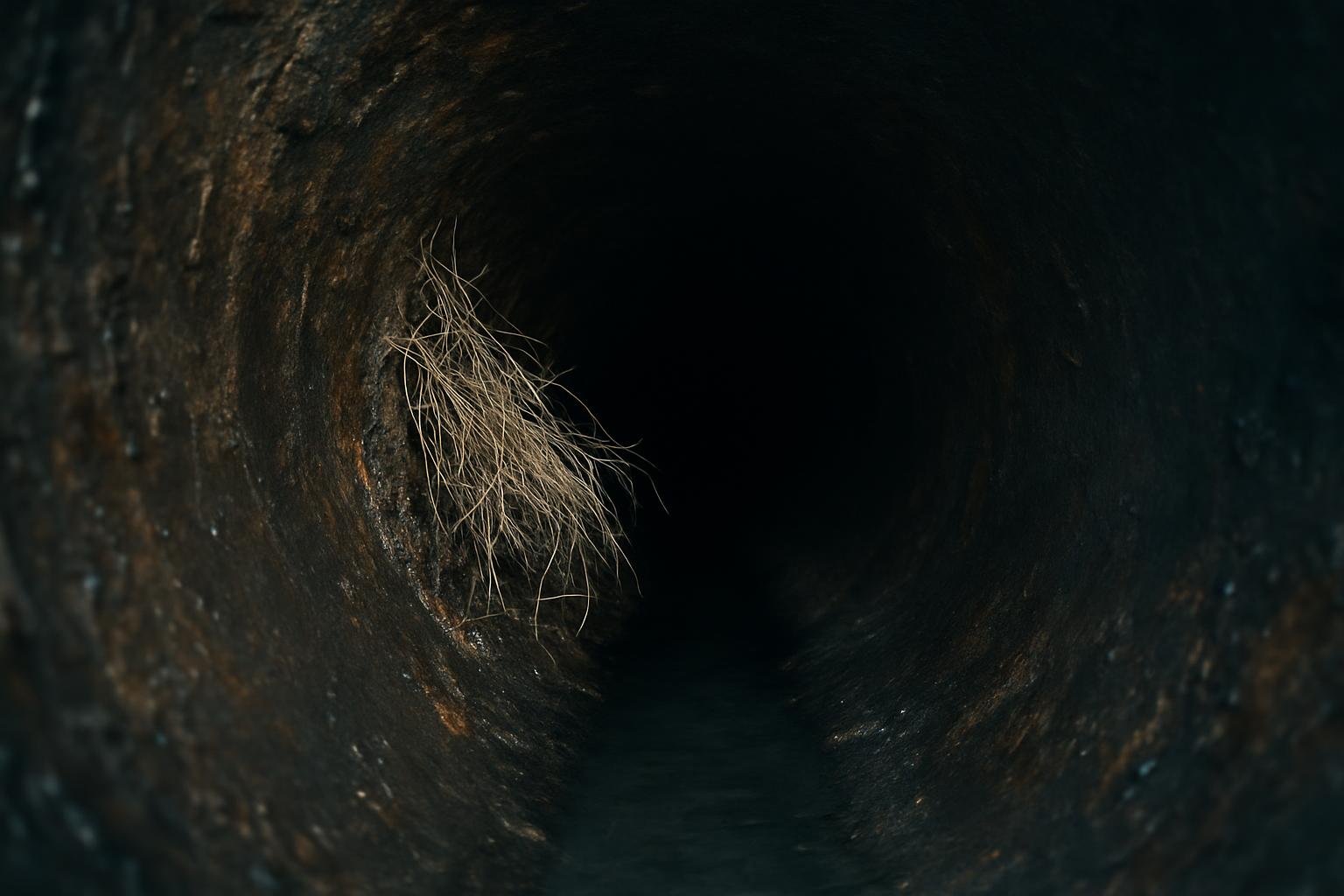
If one fixture is slow and everything else in the house drains normally, the pipe under your yard is almost certainly fine. What you have is a branch line, a short run inside the building, usually a hair and soap mat sitting at the trap or a kitchen line that cooled grease has narrowed rather than plugged.
The order of causes is worth knowing before anyone quotes. The EPA's analysis of sanitary sewer overflows found that of the line blockages reported, the most common cause was buildup of oil and grease, with tree root intrusion second. The first of those is a cleaning and a change of habit. The second is a joint, and a joint is something you look at with a camera before you price a dig.
And if the house is on public sewer inside the county district, the public half of the line can be checked before you pay anybody at all. We would rather say that on the phone than send someone out to quote an excavation you may not need.
What is different about a drain job here
We establish which side of the curb line it is on
That one answer is worth more than the rest of the quote, and it is the cheapest thing in this trade to get wrong. Onondaga County's plumbing requirements have lateral repairs reconstructed out to the curb line, and an obstruction under the street bed that cannot be cleared goes to the City sewer department rather than to you. It is the first thing to settle and the last thing most quotes mention.
A camera before an excavation, not after it
A survey turns an opinion about your sewer into a measurement. New York's residential code will not accept a pipe bursting replacement without a recorded internal camera survey both before and after the work, with the second one reviewed and approved by the building official. If the code will not take somebody's word for it, neither should you.
Grease and wipes first, roots second
The EPA's own analysis of sanitary sewer overflows found that of the line blockages reported, the most common cause was buildup of oil and grease, with tree root intrusion the second. That order changes the answer: the first is a cleaning and a habit, the second is a joint that let them in. Being told it is roots before anyone has run a camera is a sales position, not a diagnosis.
We point you at the check that costs you nothing
Inside the Consolidated Sanitary District, Onondaga County Water Environment Protection inspects the public side of the sewer, from the cleanout in your yard out to the road, with no direct charge and without you being home. Inside the City of Syracuse the call goes to the City Department of Public Works instead. We will tell you to make that call before we send anybody out.
Coverage across Syracuse and the surrounding New York area
What people ask before they call about a drain
How do I know I am not being sold an excavation when a cleaning would do?
Two things separate them, and both are settled before anyone quotes. The first is which fixtures are affected: one slow sink with the rest of the house draining normally is a branch line inside the building, and that is the smallest job in this trade. The second is a camera run from the cleanout toward the main, which reports the pipe material, the state of the joints, anything holding water, and how far from the house the fault sits. A quote written against a recorded survey is a quote you can check line by line. New York's residential code will not even accept a pipe bursting replacement without a recorded camera survey before and after the work, with the second one reviewed and approved by the building official. If somebody wants to price a dig without having located the fault first, that is a position rather than a diagnosis.
Is it tree roots?
Probably not first, and the order matters more than most people are told. The EPA's analysis of sanitary sewer overflows found that of the line blockages reported, the most common cause was buildup of oil and grease, with tree root intrusion second. Onondaga County Water Environment Protection says the same thing in kitchen and bathroom terms: wipes of every kind, cotton swabs, dental floss, hair, paper towels and sanitary products collect on soapy build-up and on deposits of fats, oils and grease until the pipe closes. Roots are real here, and the county explains why, because roots grow toward moisture and a sewer line gives them all they need. But roots get in through a defect at a joint, so the useful question is never whether there are roots. It is which joint let them in, which is what a camera answers. Cutting them out without looking at the joint buys you the same call next year.
My basement floods when it rains hard. Is that my drain?
It depends which side of the city line you are on, and this is a real difference rather than a technicality. Onondaga County Water Environment Protection states that in this county the City of Syracuse has a combined sewer system, where sewage and stormwater share a single pipe, while the other municipalities have separate stormwater and sewer systems. Inside the city, heavy rainfall or snowmelt can exceed what that shared pipe can carry, and what reaches the basement is the system rather than your lateral. Outside the city there is no rainfall path into the sanitary sewer at all, so water arriving in a storm is groundwater, a sump pump that cannot keep up, or a sump pump, roof drain, gutter or foundation drain wrongly connected into the sanitary line, which the county lists as one of the first things to go looking for. Clearing your own pipe answers only one of those.
Who pays if the blockage turns out to be under the street?
Not you, and there is a document that says so. Section 5.3 A.3 of the Onondaga County Examining Board for Plumbers requirements states that sewer lateral repairs are reconstructed to the curb line, and that where the plumbing contractor determines there is an obstruction in the service lateral that cannot be cleared and it sits under the street bed, it is the contractor's responsibility to contact the City sewer department and demonstrate it. The practical consequence is that the measurement matters as much as the diagnosis, so ask for the fault to be located and marked on the ground rather than described to you. And if the property sits inside the Consolidated Sanitary District, the county will inspect the public side first, from the cleanout in your yard out to the road, at no direct charge.
Do I actually need to call anyone?
Often not, and this is the cheapest paragraph on the page. If one fixture is slow and everything else drains normally, the fault is a short run of pipe inside the building, usually a hair and soap mat at the trap or a kitchen line that cooled grease has narrowed. That is a homeowner job. If every fixture is slow at once, that is the lateral and it does need somebody. And if the house is on public sewer inside the Consolidated Sanitary District, Onondaga County Water Environment Protection answers a 24 hour line, inspects the public side of the sewer with no direct charge, and refers you on only when the fault is not theirs. Make that call before you pay anyone. We would rather tell you that than send someone out to quote work you do not need.
Who actually does the work?
An independent contractor does. We take the details, work out which of the four jobs you are in, and hand it to a licensed, insured contractor who covers your town. They quote you, they invoice you, and your contract is with them. Onondaga County Local Law No. 9 of 1988 provides that only a contractor the county licenses may take out a permit to install plumbing here, and section 3.2 of the Examining Board's requirements obliges every licensed plumbing contractor in the county to keep certificates of insurance on file with Plumbing Control. Both are things you can ask about rather than take on trust. Telling you the fault is on the public side, or in a trap you can reach yourself, costs us the booking and is still the right answer, which is why it is on this page instead of buried.
Tell us what you are seeing
Tell us what you have and we will tell you where you stand.