
Syracuse and the surrounding New York area
Sewer Line Inspection and Repair in Syracuse
Find out what is actually wrong with the lateral, how far along the run it sits, and whether the answer is a cleaning, a spot repair or a replacement.
Sewer Line Repair quote
Tell us the town, roughly when the house was built and what the line has been doing. That is enough to say whether the next step is a camera or a cleaning, and we will put you in front of licensed, insured contractors who survey before they quote.
Would you rather talk it through? Call (315) 640-3590, answered 24/7.
$100 off your first job
Credited by us on your first booked job.
- One credit per customer per property, on your first booked job.
- Valid through December 31, 2026.
Mention this offer when you book. Full terms.
What a camera survey settles before anyone quotes
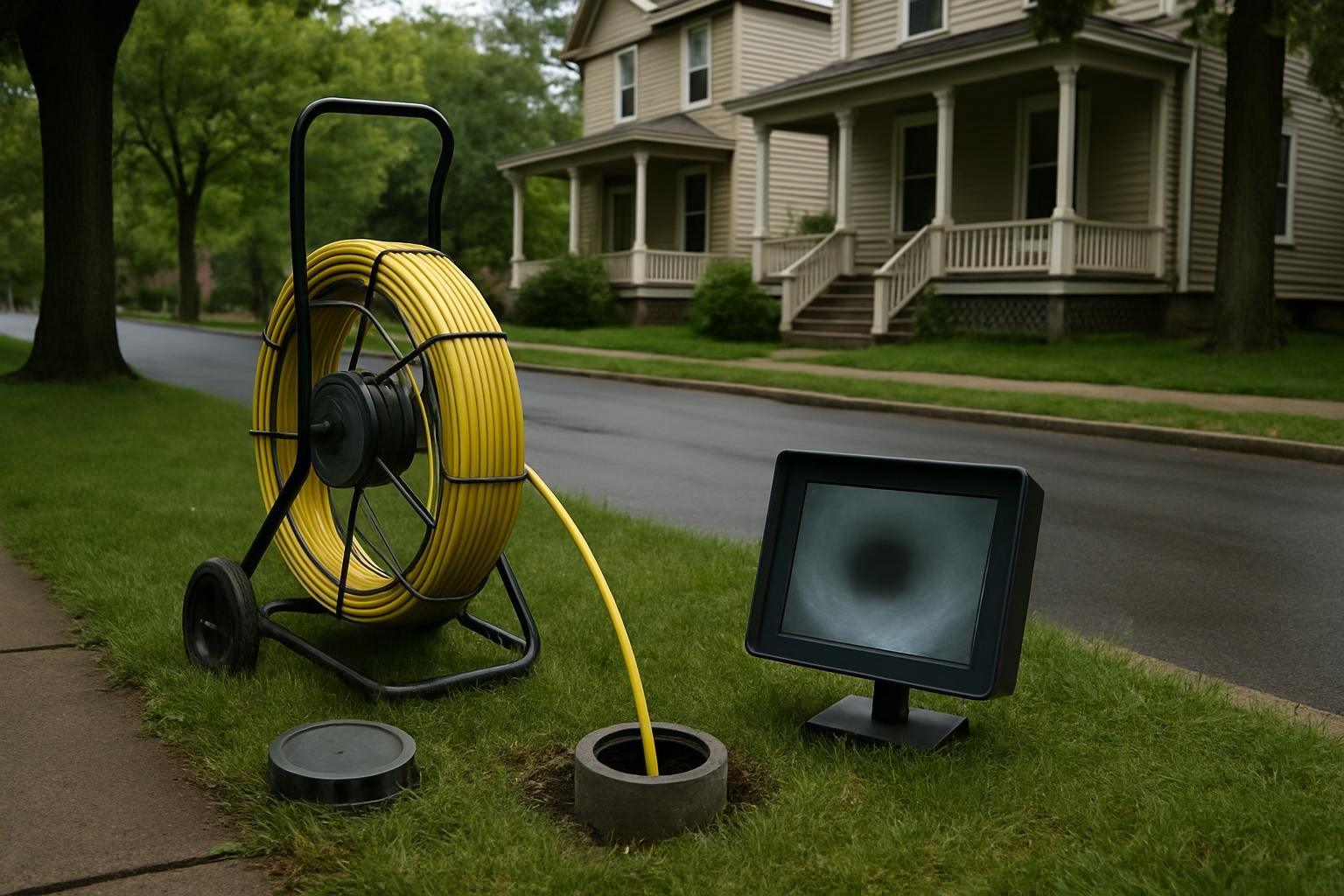
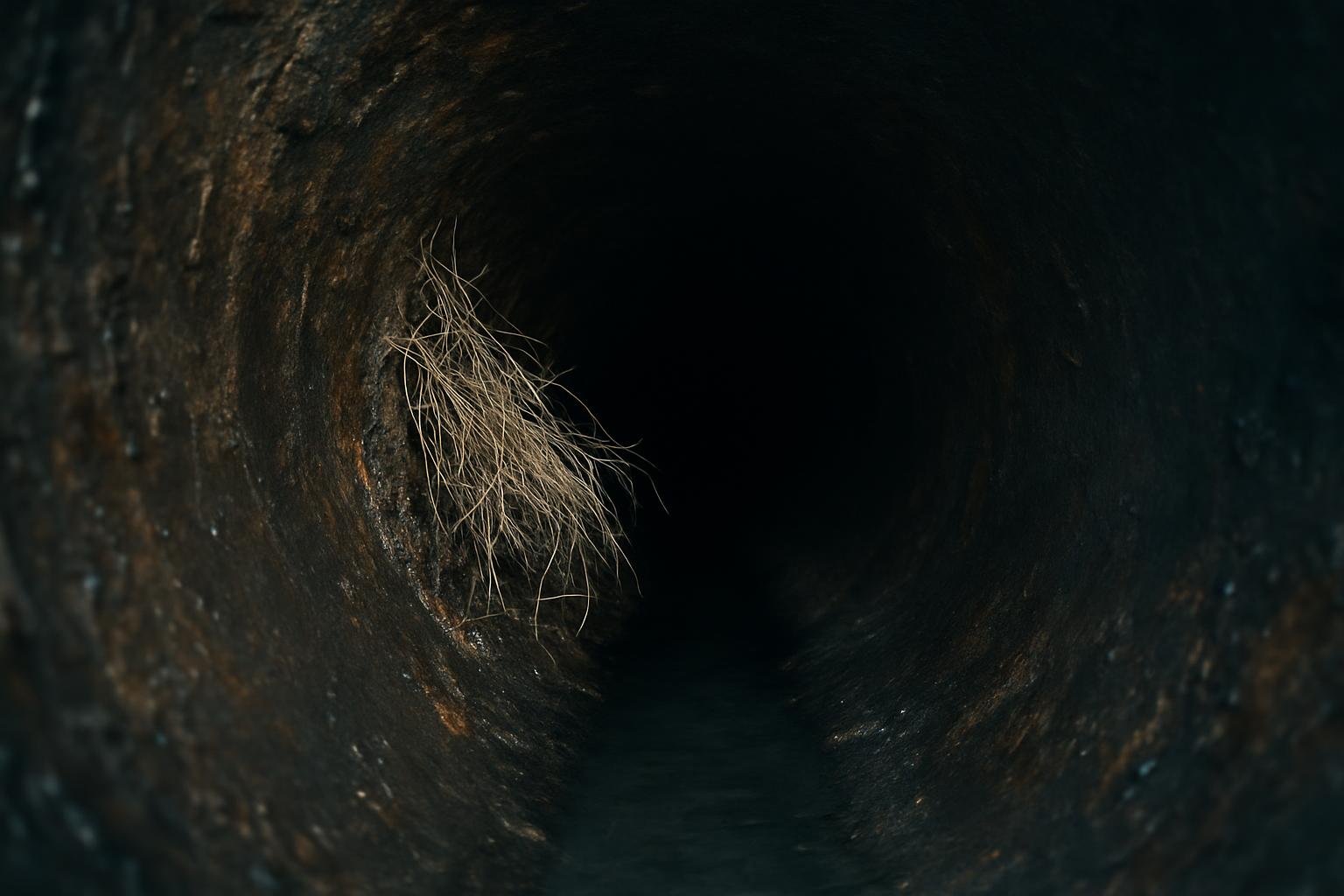
This is the step that turns an opinion about your sewer line into a measurement. A self leveling camera runs the lateral from the cleanout toward the main, a sonde in the head is tracked from the surface so the fault can be marked on the ground above it, and what comes back is the pipe material, the state of the joints, any root intrusion, any belly holding water, and the distance from the house to the problem. That distance decides most of what a repair involves, because it decides how much yard, driveway or road is in the way, and it decides who pays: the county's plumbing requirements have sewer lateral repairs reconstructed to the curb line, and an obstruction that cannot be cleared and sits under the street bed goes back to the City. Repair then follows from what the camera found, and it is not one method. A single failed joint is a spot repair. A run that has lost its shape end to end is a replacement, open cut or trenchless, and for the trenchless methods the New York residential code sets out exactly what the job has to include.
- Closed circuit camera survey of the lateral from the cleanout toward the main, recorded so you keep a copy
- Sonde locating and depth marking, so the fault is a marked spot in the yard rather than a description
- Identifying the pipe material, which on a house of the right age changes what may lawfully be cut
- Pre-purchase sewer scope before closing on an older house here
- Spot repair of one failed joint or a crushed section, instead of the whole run
- Trenchless replacement by pipe bursting, which the New York code recognizes and regulates in its own section
- Cured in place and fold and form lining where the host pipe will take it
- Open cut replacement to the curb line, with a cleanout fitted where the old line never had one
What decides between a repair and a replacement
A survey answers most of this in an afternoon. These are the things it is looking for, and what each one changes about the work that follows.
How far along the run the fault sits
Distance is the number the whole quote hangs on, because it decides how much yard, driveway or road is involved and it decides ownership. Section 5.3 A.3 of the county's plumbing requirements has all sewer lateral repairs reconstructed to the curb line, and where the contractor finds an obstruction in the lateral that cannot be cleared and it lies under the street bed, the contractor contacts the City sewer department and demonstrates it. Get the distance marked on the ground before you read a price.
What the pipe is made of
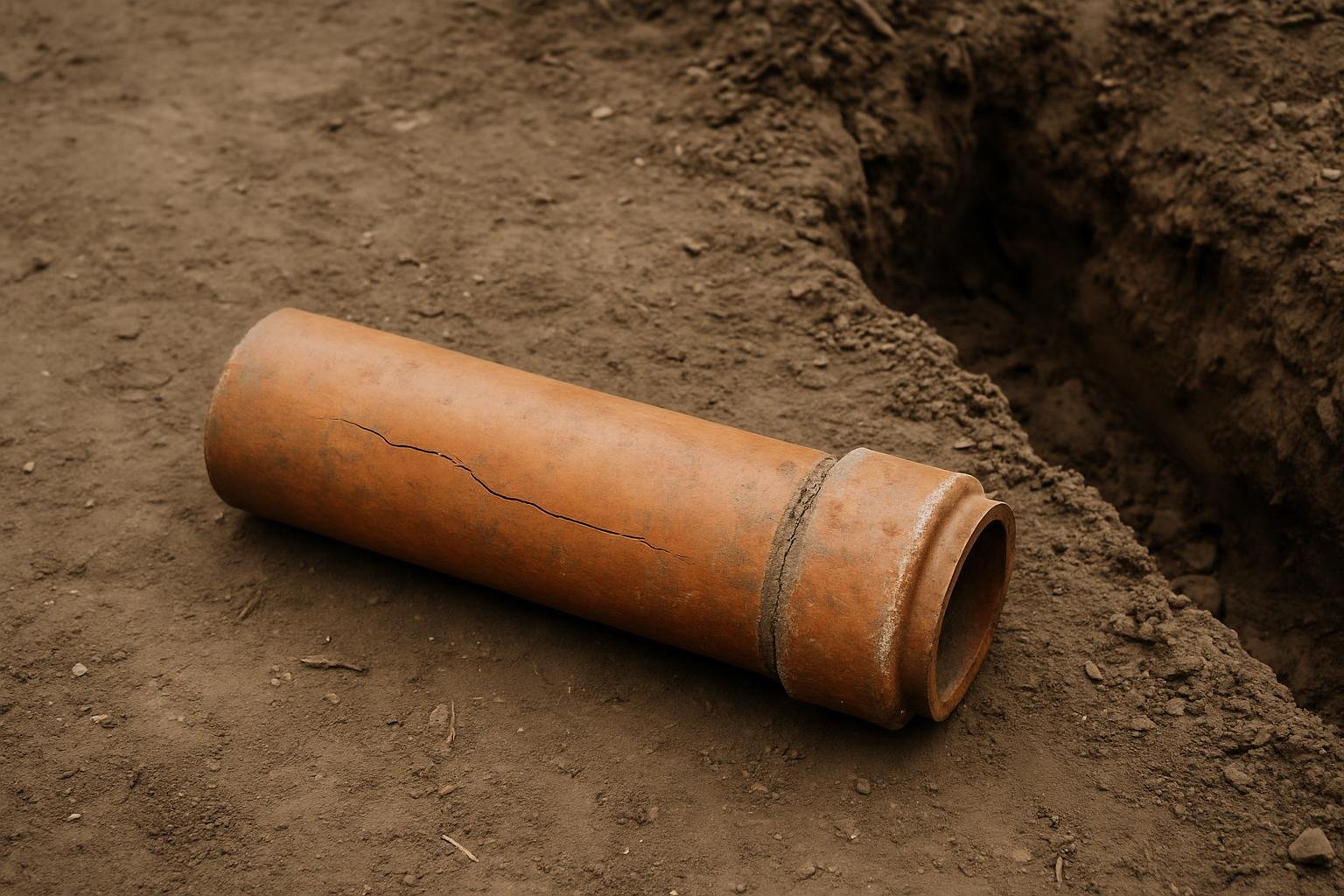
Table P3002.2 of the New York residential code still permits vitrified clay for a building sewer, so a sound clay line is not a defect. Bituminized fiber is a different story. The federal standard behind it, Commercial Standard CS116-44, contains no service life requirement at all and its longest durability test ran thirty days, which is the entire history of that pipe's failure in one document. Because it is not a permitted material today, a failed section cannot lawfully be replaced in kind.
Whether the pipe contains asbestos
This changes who may lawfully touch it. New York Industrial Code Rule 56 makes more than 25 linear feet of asbestos containing material a small asbestos project, section 56-3.1 forbids any contractor from taking on an asbestos project without a valid asbestos handling license, and non-friable does not mean unregulated. It is a live question here: bituminized fiber pipe contains asbestos, and the Village of Fayetteville's code still contemplates Transite or equal asbestos-cement building sewer pipe with the Superintendent's approval.
How deep the line is
Onondaga County sets minimum cover for a building sewer at 48 inches, six inches more than frost depth, with insulation board required where there is less. Four feet is the local standard and it is set by the county rather than the state code, so the trench is deeper here than in much of the country. Depth moves excavation, shoring and restoration, and it is not something a quote should discover on the day.
Whether the basement floor drain survives
This is the change order nobody warns about. Section 5.5 C of the county requirements says that where repair or replacement of a building sewer or drain eliminates an active basement floor drain, or where there is none, a recessed sump and effluent pump must be installed to remove surface and clear water. Ask before the work starts whether the floor drain lives, because if it does not, a pump and a discharge route belong on the quote rather than on an invoice afterwards.
What review sits in front of the connection
Inside the Consolidated Sanitary District, Capacity Assurance review is required for all new lateral connections to existing sewer mains and for the re-use of existing laterals, before the county Health Department can approve the work and WEP Plumbing Control can issue a permit. Submissions go through the county portal and feedback or approval is provided within 45 days, and an offset plan for stormwater and groundwater inflow may be a condition. In the City of Syracuse there is a second layer: the lateral must be flushed by the Department of Public Works before a contractor connects to it, and no WEP inspection is made without proof it has been flushed and televised to the main.
Who is allowed to do the work
Plumbing is genuinely licensed in this county, which is unusual for a home trade. Local Law No. 9 of 1988 restricts permits for installing plumbing to Master Plumbers and Plumbing Contractors Class B and C licensed by WEP, with penalties per offense for going without. The county also requires every licensed plumbing contractor to keep insurance certificates on file with Plumbing Control, and requires proof of underground operations coverage, the U hazard, from anyone excavating to install a sewer. Digging up a lateral is a different insurance question from unclogging a sink.
Been told you need a new sewer line?
A recorded survey says where the fault is and how far it sits from the curb, and it says it before anyone prices a trench.
How a survey turns into a repair
Get access, and start at the cleanout
The code requires a cleanout at the junction of the building drain and the building sewer or within 10 feet of piping upstream of it. Where the house has one, the survey starts there. Where it has none, fitting one is usually part of the work rather than a reason to postpone it.
Run the whole line, not the first twenty feet
The interesting part of a lateral is rarely near the house. It is at the joints, at the point where the line passes under a tree or a driveway, and at the connection to the main. A survey that stops when it finds the first thing has found the first thing, not the problem.
Locate the fault and mark it on the ground
The sonde in the camera head is tracked from the surface, so the fault becomes a spot in the yard with a depth against it. That is what makes a quote checkable. Without it, you are buying a description.
Establish the material before anything is cut
Clay, cast iron, PVC, concrete or bituminized fiber, and whether asbestos is in it. This decides both the method and the licensing. New York treats disturbing more than 25 linear feet of asbestos containing material as a small asbestos project requiring a licensed asbestos contractor, and the exemption in the rule reaches only an owner-occupied single family dwelling where the owner does the work themselves.
Work out which side of the curb line the fault is on
Inside it, the repair is yours and it is reconstructed to the curb line. Beyond it, and where the obstruction cannot be cleared, the county requirement is that the contractor takes it to the City sewer department and demonstrates it. That step is the difference between a repair and somebody else's repair.
Choose a method the pipe will actually take
Section P3010 of the New York code governs pipe bursting: gravity piping of 6 inches and smaller, replacement at the same nominal size, high density polyethylene to ASTM F714, a recorded internal camera survey both before and after, the after survey reviewed and approved by the building official before pressure testing, and cleanout fittings installed where the existing sewer had none. Section 3011 does the same for PVC fold and form. A trenchless quote with no post-installation video in it is not describing the method the code allows.
Allow for the permit and the review
Capacity Assurance feedback or approval comes within 45 days inside the county sewer district, and a City of Syracuse lateral connection also needs approval from the City Engineer or Commissioner of Public Works before WEP will issue a plumbing permit, plus a video recording filed with the City Sewer Department and Plumbing Control. In North Syracuse the permit application goes to the county before any sewer construction commences, and the connection is made under the supervision of the village Superintendent.
Protect what the work takes away
Where the job eliminates an active basement floor drain, the county requires a recessed sump and effluent pump discharging to daylight or an approved point. Any abandoned pipe left in the ground has to be capped watertight at both ends, and any floor or wall penetration made watertight, so nothing seeps back into the building through the hole the old line came in by.
What sewer line repair looks like
Where this service starts and stops
When you may not need this at all
- A survey earns its keep when there is a symptom, a house of the right age, or a purchase in front of you. On a line that has never blocked, in a house built after plastic drain pipe became normal in the early 1970s, there is usually nothing for a camera to find. Baldwinsville village has a median build year of 1975 and Radisson 1990, and 2.2 percent of Seneca Knolls predates 1950.
- Have the public half checked before you commission anything. WEP inspects the public side of the sewer for properties in the Consolidated Sanitary District, from the cleanout in your yard out to the road, with no direct charge for the visit, and a City of Syracuse address gets the same from the City Department of Public Works. If the fault turns out to be past your cleanout in the public sewer, there is nothing here for you to buy.
- If a quote for a full replacement arrives without a recording, ask for the recording. On a City of Syracuse lateral connection a video already has to be given to the City Sewer Department and to WEP Plumbing Control, so a copy exists and it is not an unreasonable thing to want.
- If the pipe is asbestos-cement or bituminized fiber and more than 25 linear feet of it is being disturbed, this is not ordinary plumbing work and it should not be quoted as though it were. It needs a contractor holding a valid asbestos handling license, and the rule requires that contractor to tell everyone else on site that disturbance by anyone else is prohibited.
- If the property is on septic rather than sewer, look at the funding before the quote. The county Health Department administers New York's Septic System Replacement Funding Program for substandard or failing systems within 250 linear feet of Skaneateles Lake and its tributaries, Otisco Lake, Jamesville Reservoir, the Seneca River between the Cross Lake outlet and Klein Island, or Rush Creek Upper and its tributaries. And note the other direction: WEP states that where a septic system fails and sewer service is available, hookup becomes mandatory under public health codes.
What is out of scope
- Anything past the curb line. The public main belongs to the municipality, and a fault there is demonstrated and reported, not bought.
- Removal or handling of asbestos-cement or bituminized fiber pipe as ordinary plumbing work, which New York does not permit.
- Septic tank pumping, tank replacement and leach field construction.
- Final landscaping, paving and hardscape restoration beyond backfill and compaction, which is quoted separately.
- Water service lines. A domestic water service runs at 54 inches of cover in this county and is a different permit and a different job.
- Interior finishes damaged by a backup before the repair, and the cleanup that follows one.
- Deciding what a homeowners policy will pay.
Where we arrange sewer line inspection and repair
- Sewer Line Repair in Syracuse
- Sewer Line Repair in North Syracuse
- Sewer Line Repair in East Syracuse
- Sewer Line Repair in Liverpool
- Sewer Line Repair in Cicero
- Sewer Line Repair in Clay
- Sewer Line Repair in Salina
- Sewer Line Repair in DeWitt
- Sewer Line Repair in Manlius
- Sewer Line Repair in Fayetteville
- Sewer Line Repair in Camillus
- Sewer Line Repair in Baldwinsville
- Sewer Line Repair in Marcellus
- Sewer Line Repair in Skaneateles
- Sewer Line Repair in Jamesville
- Sewer Line Repair in Solvay
What people ask before they agree to a dig
How do I know whether this is a cleaning or a dig?
A recorded camera survey is the only honest way to tell, and it tells you before anyone quotes. It shows the pipe material, whether the joints are open, whether roots are in and where they came through, whether a section holds water, and the distance from the house to whatever is wrong. Most blockages are cleared rather than dug up, and the federal data points the same way: the most common cause of line blockages is grease buildup, which comes out. What sends a line toward replacement is condition rather than a blockage, and condition is exactly what a camera reports on.
How quickly can a new lateral connection be approved?
Not as quickly as most people expect, and this is the constraint worth knowing before anyone promises a date. Inside the Onondaga County Consolidated Sanitary District, Capacity Assurance review is required for all new lateral connections to existing sewer mains and for the re-use of existing laterals, before the work can be approved by the county Health Department and a permit issued by WEP Plumbing Control. Submissions go through the county's portal and feedback or approval is provided within 45 days, and an offset plan addressing stormwater and groundwater inflow may be a condition of approval. A City of Syracuse connection adds more: approval from the City Engineer or Commissioner of Public Works before a permit issues, the lateral flushed by the Department of Public Works, and proof it has been televised to the main. Anyone offering to have a lateral connection done inside a week is describing work that has not been through that review.
What is trenchless, and is it allowed in New York?
It is allowed, and the code is unusually specific about it, which works in your favor when reading a quote. Section P3010 governs replacement by pipe bursting: gravity drainage piping of 6 inches and smaller, replacement at the same nominal size, high density polyethylene pipe to ASTM F714, an internal recorded video camera survey both before and after the work, the after survey reviewed and approved by the building official before pressure testing, and cleanout fittings installed where the existing sewer did not have them. Section 3011 sets the parallel rules for PVC fold and form. Trenchless is a code-recognized method here, not a shortcut, and a quote for it that contains no post-installation video is not describing the method the code allows.
My house is from the 1950s and the line keeps collapsing. What is that?
That is the classic bituminized fiber pattern, and geography backs it up. The Orangeburg years line up with the post-war suburbs rather than the oldest neighborhoods: Fairmount is 72.3 percent housing built between 1940 and 1969, Seneca Knolls 71.8, Westvale 71.2, Galeville 70.6 and Mattydale 65.4. The pipe is a bituminous compound reinforced with fiber, and the federal standard that governed it, Commercial Standard CS116-44, has no service life requirement in it at all. Its longest durability test ran thirty days. On a house in that window the camera goes in before anything mechanical, because a rooter or cutter can finish the pipe off, and because that pipe contains asbestos, which changes who may lawfully cut it.
Can I do any of this myself?
Some of it, and the law is clear about where it stops. Onondaga County Local Law No. 9 of 1988 lets a homeowner take out a permit to alter the plumbing in their own home, where the title is in their name or jointly with a spouse, the home is no larger than one family size, a letter of intent has gone to Plumbing Control, and a county plumbing inspector inspects the work. Paragraph 2(b)(4)(e) then closes the door on the part that matters here: it is prohibited for any such person to connect a private sewer to any public sewer within the County of Onondaga. The tie-in goes to a licensed plumbing contractor whatever else you do yourself.
How do I check a contractor before they dig up my yard?
Three things, all free to do. WEP publishes a master list of businesses operated by active Master Plumbers licensed in Onondaga County, most recently updated in January 2025, carrying 71 businesses with a telephone number for each, and the county is explicit that it endorses none of them. The county also requires every licensed plumbing contractor to keep insurance certificates on file with Plumbing Control, and requires proof of underground operations coverage, the U hazard, from anyone excavating to install a sewer, so that is a fair thing to ask to see before the excavator arrives. And one local wrinkle: WEP's own licensing page qualifies what a county master license lets a business do with the words Onondaga County, except the City of Syracuse, so for a city job confirm directly what additional standing is needed.
Tell us what the line has been doing
How often it blocks, and how old the house is, decides what a survey is looking for.