
Syracuse and the surrounding New York area
Sewer Line Cleaning and Root Removal in Syracuse
Clear the one pipe that carries the whole house out to the street, take the roots or the grease out of it, and establish where along that run the blockage actually sat.
Sewer Line Cleaning quote
Tell us the town, roughly when the house was built, and whether the whole house is slow or only part of it. Those three answers decide whether this is a cable, a jetter or a camera first, and we will put you in front of licensed, insured contractors who say where the blockage sat rather than only that it has gone.
Would you rather talk it through? Call (315) 640-3590, answered 24/7.
$100 off your first job
Credited by us on your first booked job.
- One credit per customer per property, on your first booked job.
- Valid through December 31, 2026.
Mention this offer when you book. Full terms.
One pipe, and the boundary in it that decides who pays
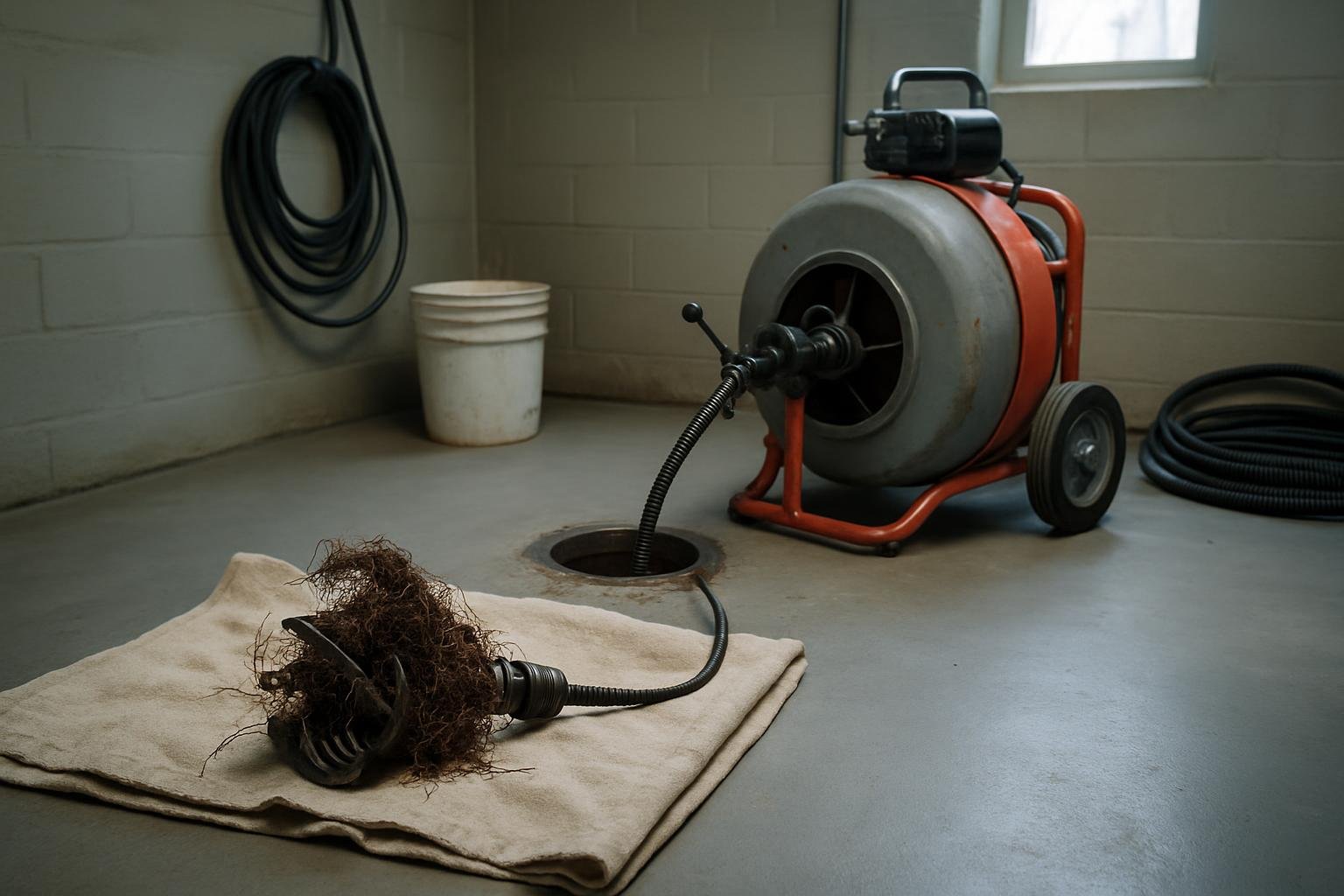
Sewer line cleaning is work on the lateral, the single pipe that takes everything from the house out to the public main. When it narrows, every fixture slows at the same time and the lowest opening in the building, usually a basement floor drain, is the first to overflow. A cable machine with a cutting head, or a jetter with a root nozzle where the deposit is grease, goes in through the cleanout and opens the full diameter of the pipe rather than a channel through the middle of whatever is in it. A camera then says what is left. The part worth insisting on is where along the run the obstruction sat, because there is a boundary in that run. Section 5.3 A.3 of the Onondaga County Examining Board for Plumbers requirements has all sewer lateral repairs reconstructed to the curb line, and where a licensed plumbing contractor finds an obstruction in the lateral that cannot be cleared and it lies under the street bed, it is that contractor's responsibility to contact the City sewer department and demonstrate it. A blockage on the far side of that boundary is not your bill.
- Main line cabling through the cleanout, with a cutting head sized to a four or six inch lateral
- Root cutting, then a camera at the joint the roots came through, because the joint is why they were there
- Hydro jetting a grease coated lateral, which strips the wall back to the pipe instead of boring through the deposit
- Descaling cast iron building drains, where scale rather than an obstruction is what has narrowed the bore
- Clearing to the curb line, and establishing on the day where along the run the blockage actually sat
- Locating an existing cleanout, or fitting one so the line can be reached from the yard next time
- Lines with a known reason to block put on a cleaning interval instead of being cleared again every winter
What changes a sewer cleaning here
Two houses with the same symptom get different work, and most of the difference is settled before anyone opens a cleanout. These are the things that move it.
Where along the run the obstruction sits
This is the money question and it has a documented answer. The county's plumbing requirements have all sewer lateral repairs reconstructed to the curb line, and where the licensed plumbing contractor finds an obstruction in the lateral that cannot be cleared and it is under the street bed, the requirement is that the contractor contacts the City sewer department and demonstrates it. Ask for that demonstration before agreeing to any work in the street.
Whether it is grease or roots, because they are not cleared the same way
The EPA found that of the line blockages it studied, buildup of oil and grease was the most common cause and root intrusion the second. A cable cuts an object out of the way. A jetter takes a coating off the wall. Sending the wrong one gets the house draining today and puts you back here inside a year, which is the pattern most people on their third cleaning are actually stuck in.
Whether the joints are still open once the roots are out
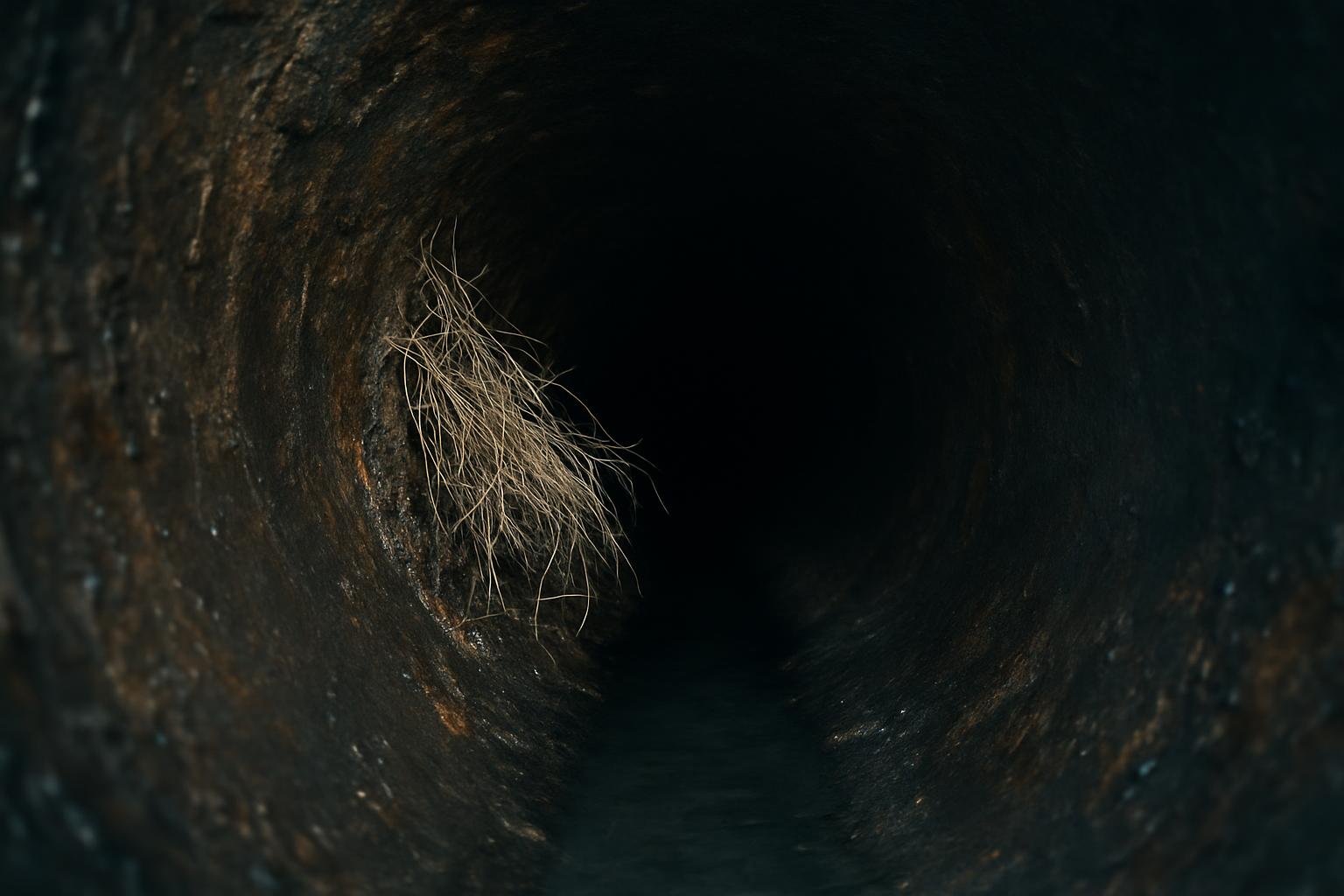
WEP's account of root intrusion is that roots grow toward moisture, that a sewer line gives them all the moisture they need, and that once inside they multiply until they clog the pipe and can eventually crack it. They do not attack a sound pipe at random, they follow water leaving a joint. Cutting them and walking away restarts the clock, so the visit that matters includes a camera at the joint, not just another cable.
The age of the house, because it decides what the pipe is
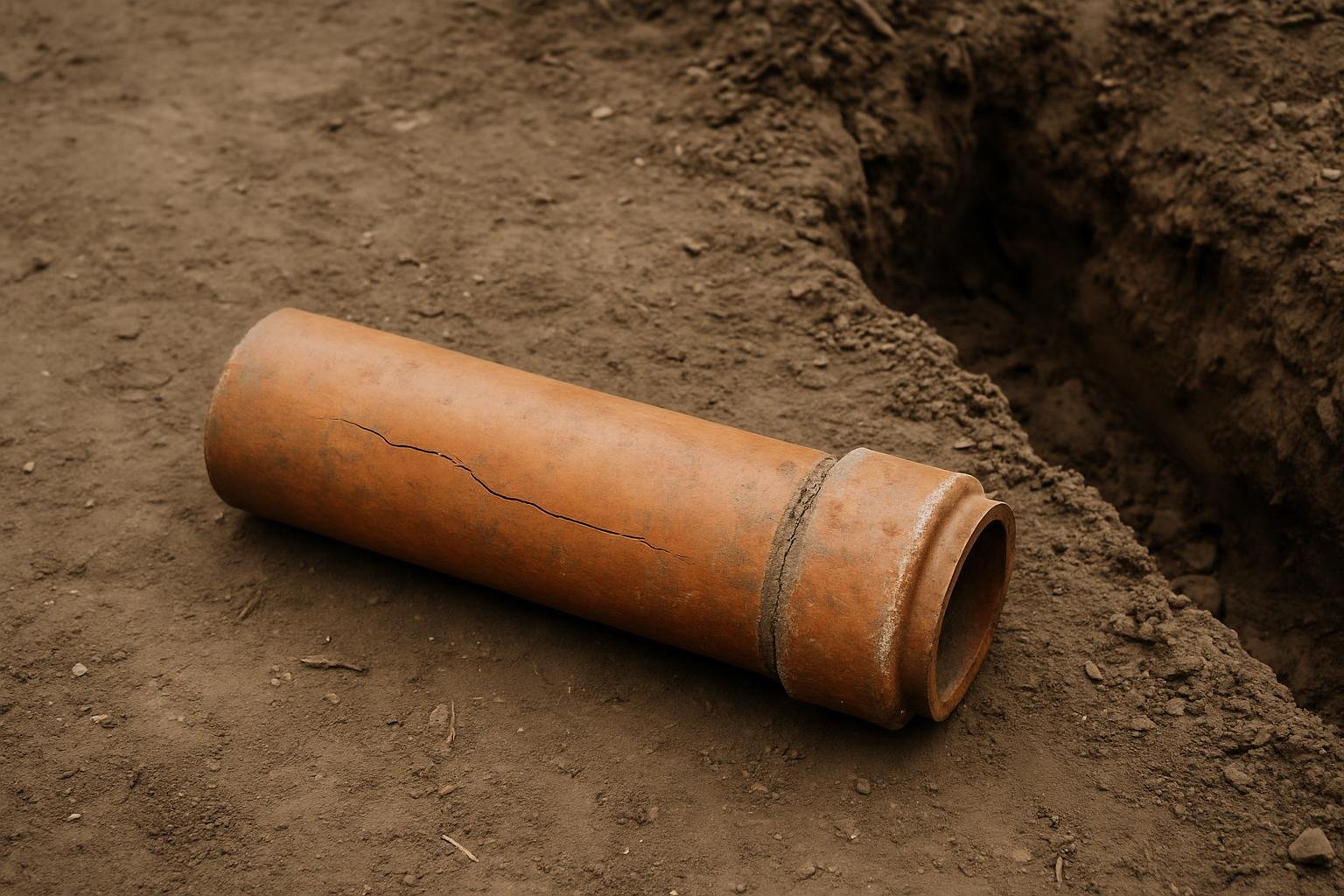
East Syracuse village is 62.1 percent pre-1950 housing and Liverpool village 60.4 percent, against 5.6 percent in the Town of Clay. Vitrified clay is still a permitted material for a building sewer under the New York residential code, so a sound clay lateral does not have to come out on principle. What clay has is joints every few feet, and joints are the way in.
Whether the house sits in the mid-century belt
Fairmount is 72.3 percent housing built between 1940 and 1969, Westvale 71.2, Galeville 70.6, Mattydale 65.4 and North Syracuse village 55.3. Those are the years bituminized fiber sewer pipe was in production under federal Commercial Standard CS116. In that window the camera goes in before the cable, because the published warning on that material is that inserting a rooter, snake or mechanical cutter may further damage the pipe.
What is growing over the run
The USDA Forest Service put tree cover across Syracuse at 26.6 percent with an estimated 890,000 trees, and of 34,165 street trees counted, Norway maple was 24.3 percent and silver maple 8.9 percent. In the city, a street tree standing over a pre-1950 lateral is the normal case rather than bad luck. Fayetteville writes it into law: the village may require cast iron with leaded joints where the building sewer is exposed to damage by tree roots.
How deep the line is
Onondaga County sets minimum cover for a building sewer at 48 inches, which it describes as six inches more than frost depth, and requires insulation board where there is less. Depth decides what any later excavation costs, and it decides what freezes in February. The county's own caution is that insulation over a shallow line with little or no flow does not work here, because such a line has no self heating effect.
Want to know whose pipe it is before anyone digs?
Where along the run the blockage sits decides who pays for it, and it can be established on the day.
The order a main line job runs in
Check what the whole house is doing
Every fixture, on every level, plus the basement floor drain with the washing machine running. A main line diagnosis made from one slow sink is a guess, and it is the guess that ends with a cable in a branch line while the lateral stays blocked.
Start at the cleanout, or make one
The code puts a cleanout at the junction of the building drain and the building sewer, or within 10 feet of piping upstream, and requires them at no more than 100 foot intervals on sewers smaller than 8 inches. Where a house has none, the line is entered through the roof vent or by pulling a toilet, and fitting a proper cleanout at the same time is the improvement that pays for itself on the next visit.
On a mid-century house, look before you cut
Fairmount, Westvale, Galeville, Mattydale and North Syracuse have the county's heaviest concentration of housing from the bituminized fiber years. A video scan identifies that pipe. A cable can finish it off. The order is not a preference on those streets, it is the difference between a cleaning and a replacement.
Cable or jet, according to what is in there
Roots and hard objects come out on a cutting head. A grease coating comes off with water at pressure, because a cable through grease leaves a hole in the deposit and the deposit closes again. Grease is the most common cause of line blockages in the EPA's own numbers, so this choice is made more often than the root story suggests.
Put the camera down once the line is open
This is where a cleaning stops being a mystery. The camera says what the pipe is made of, whether the joints are open, whether roots are back in already, and whether there is a belly holding water that will collect the next blockage in the same spot.
Establish where the obstruction was along the run
Distance from the house, marked on the ground. Inside the curb line it is your pipe and your repair. Beyond it, the county requirement is that the contractor takes it to the City sewer department and demonstrates it rather than billing you to dig in the road.
Decide whether this was a clean, or a clean and a repair
Roots came through something. Grease built up on something. A line that has blocked twice has a reason, and the honest end of a cleaning is a recommendation you can check on the recording, not a date for the next visit.
What sewer line cleaning looks like
Where this service starts and stops
When you may not need this at all
- Before you pay anyone, get the public half checked. Onondaga County WEP inspects the public side of the sewer for properties in the Consolidated Sanitary District, which it describes as running from the cleanout or vent pipe in your yard out to the road and into the public sewer. There is no direct charge for the visit and you do not need to be there. For a City of Syracuse address that call goes to the City Department of Public Works instead, and a property outside the district calls its own town or village. Three different bodies, one question, and it decides whether there is a job here at all.
- If the line only backs up in heavy rain or during a thaw and runs perfectly the rest of the year, it is probably not blocked. WEP states that the City of Syracuse has a combined sewer system while the other municipalities have separate storm and sanitary systems, and the county reported 97.7 percent capture of combined flow for 2018 system conditions. A wet weather event and a dry weather blockage are different problems with different owners.
- If the house was built in the bituminized fiber window and the line has collapsed rather than slowed, a cleaning may be the wrong first move. The camera goes in first on those streets, because a rooter or cutter in that pipe can turn a survey into a replacement.
- If your house shares a lateral with the one behind it, establish that before you agree to pay for anything beyond your own boundary. Fayetteville, North Syracuse and East Syracuse all require a separate building sewer per building, with a narrow exception for a rear building on an interior lot, where the whole run is then treated as one building sewer and two owners share the consequences.
- If the address is outside the Consolidated Sanitary District, there is no county line to call. The Village of Skaneateles runs its own sewer system and treatment plant with its own service line, and outside the village the Town of Marcellus has no public sewer at all.
What is out of scope
- The public main. Everything past the curb line belongs to the municipality, and a fault there is demonstrated and reported, not bought.
- Excavation, lining and replacement, which follow a camera survey and are priced from what it finds.
- Asbestos-cement and bituminized fiber pipe, which New York treats as an asbestos project once more than 25 linear feet of it is disturbed.
- Storm drainage. Outside the City of Syracuse the storm and sanitary systems are separate, and the village codes here forbid connecting roof leaders, foundation drains and areaway drains to a building sewer.
- Septic tanks, distribution boxes and leach fields.
- Cleaning and disinfecting a basement that has had sewage in it.
- Interior fixture work. Faucets, traps and toilets as jobs of their own.
Where we arrange sewer line cleaning
- Sewer Line Cleaning in Syracuse
- Sewer Line Cleaning in North Syracuse
- Sewer Line Cleaning in East Syracuse
- Sewer Line Cleaning in Liverpool
- Sewer Line Cleaning in Cicero
- Sewer Line Cleaning in Clay
- Sewer Line Cleaning in Salina
- Sewer Line Cleaning in DeWitt
- Sewer Line Cleaning in Manlius
- Sewer Line Cleaning in Fayetteville
- Sewer Line Cleaning in Camillus
- Sewer Line Cleaning in Baldwinsville
- Sewer Line Cleaning in Marcellus
- Sewer Line Cleaning in Skaneateles
- Sewer Line Cleaning in Jamesville
- Sewer Line Cleaning in Solvay
What people ask about a main line
Everyone says it is roots. Is it roots?
Sometimes, and less often than the trade implies. The EPA's analysis of sanitary sewer overflows found that of the line blockages reported, the most common cause was buildup of oil and grease, with tree root intrusion second. Roots are real here, and the USDA Forest Service counted 890,000 trees in Syracuse with maples making up a third of the street trees, so a pre-1950 city lateral under a maple is a genuine root candidate. But a line that blocks every year in a yard with nothing growing over it is a grease line, and cutting roots that were never there is an expensive way to find that out.
How do I know the blockage is on my side of the line?
You establish it rather than assume it, and there are two ways. First, the county will look at the public half at no direct charge if the property is in the Consolidated Sanitary District, and in the City of Syracuse the Department of Public Works does the same thing. Second, the county's plumbing requirements put a duty on the contractor: where an obstruction in the lateral cannot be cleared and it sits under the street bed, the licensed plumbing contractor is to contact the City sewer department and demonstrate it. Ask for the distance from the house, marked on the ground, before anything is agreed.
It blocks every year. Is another cleaning a waste of money?
Another cleaning with no camera probably is. A line that blocks on a schedule has a physical reason: an open joint letting water out and roots in, a length of pipe that has lost its shape and holds water, or a grease coating that was bored through rather than removed. WEP's description of the root mechanism is that they follow the moisture out of the pipe, multiply inside it, and can eventually crack it, so the roots and the leaking joint are one problem. Cutting the roots and leaving the joint sets the same clock running again.
Should a camera go down before the cable?
On some streets here, yes, and it is not an upsell. The post-war suburbs are where bituminized fiber sewer pipe is concentrated: Fairmount is 72.3 percent housing built between 1940 and 1969, Westvale 71.2 and Mattydale 65.4. The City of Ann Arbor's building department, which publishes one of the few municipal guides to identifying it, lists a video scan as the way and warns that inserting a rooter, snake or mechanical cutter may yield clues and may also further damage the pipe. On a house of the wrong age, the cheap step first can create the expensive one.
My lateral is clay. Does the whole thing have to come out?
No. Table P3002.2 of the New York residential code still lists vitrified clay among the materials permitted for a building sewer today, alongside concrete, cast iron, ABS, PVC, polyethylene, copper and stainless steel. A clay lateral in sound condition is not a defect to be ripped out on principle. Bituminized fiber is the opposite case: it appears nowhere on that list, so a failed section of it cannot lawfully be replaced with more of the same.
Tell us the town and the age of the house
Those two answers narrow the pipe and the likely cause before anyone arrives.