
Roots Get the Blame. Grease and Wipes Get There First
Usually not first. The EPA's own analysis of sanitary sewer overflows found that of the line blockages reported, the most common cause was buildup of oil and grease, with tree root intrusion the second most important cause. Roots are real here, they are just rarely what started it.
Already know you need someone out? Call (315) 640-3590, answered 24/7.
What the EPA actually found, in order
The EPA's analysis of sanitary sewer overflows states that more than 70 percent of the overflows studied were attributed to line or main breaks or to line blockages, that most breaks were reported in old pipes, and that of the line blockages reported the most common cause was buildup of oil and grease, with tree root intrusion the second most important cause. It adds that systems not routinely cleaned and repaired experience more frequent clogged and collapsed lines from root growth and from accumulated debris, sediment, oil and grease. That ordering matters to a homeowner more than it does to an engineer, because the two causes carry different bills. A grease buildup is cleaned out. A root intrusion has to be cut, and then the defect the roots came in through has to be dealt with, or they simply come back and you pay again.
Grease does not arrive at the pipe as grease
WEP describes the mechanism directly: plumbing and wastewater systems are designed to handle only human waste and toilet paper, and the things that should not be there collect in pipes on soapy build-up and on deposits of fats, oils and grease, leading to sewer blockages and back-ups. That is the part people miss. Nobody pours a pan of fat down the sink and watches the line stop. What happens is that a film builds over months on the inside of the pipe, the bore narrows, and then one ordinary thing catches on it and the drain quits. Which is also why a blockage almost never has an obvious cause on the day it happens, and why the honest answer to what did we do wrong is usually nothing, last week.
The list of what is not flushable, from the people who clear it
WEP names them: all wipes, including baby, personal care and cleaning wipes, plus cotton balls, cotton swabs, dental floss, hair, tissues, paper towels, sanitary products, diapers, cat litter and animal waste. The EPA puts the same class of item at the head of its causes of sanitary sewer overflows and is pointed about the labeling, listing products marked flushable such as baby wipes and sanitary pads. A wipe marked flushable will clear the toilet. That is the entire claim the word makes. It will not break apart the way paper does, and in a line already narrowed by a grease film it is exactly the thing that catches and holds. If you take one action away from this page, make it the wipes.
Roots are real, and there are a lot of trees here
WEP states that tree roots are naturally inclined to grow toward moisture, that a sewer line gives them all the moisture they need, that they can intrude and then continue to grow and multiply until they clog the pipe, and that they can eventually crack it. Its advice is to be mindful of where the sewer line runs before planting. The scale of the exposure in this city is documented rather than assumed: the USDA Forest Service found tree cover in Syracuse averaging 26.6 percent across the city's neighborhood planning areas, with an estimated 890,000 trees on public and private land, and a complete inventory counted 34,165 street trees, of which Norway maple alone was 24.3 percent. A street tree stands a few feet from a lateral running out to the curb. None of that is an argument for cutting anything down. It is an argument for knowing where your line runs.
Roots need a way in, and old pipe gives them one
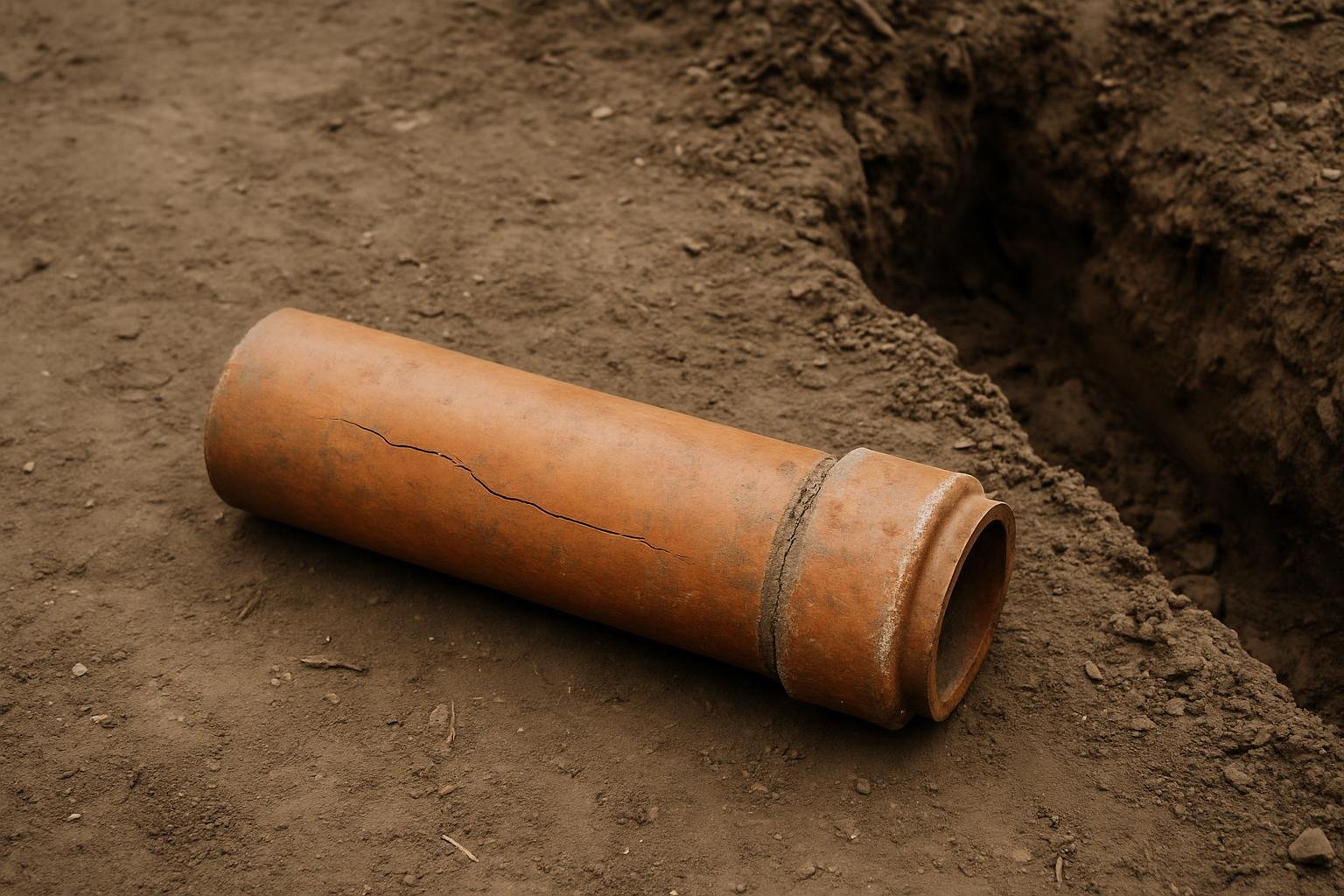
The EPA describes tree roots entering through defects or openings in a sewer line, and separately notes that most of the pipe breaks in its study were reported in old pipes. That is the link between the two halves of this guide: roots do not drill through sound pipe, they find a joint that has opened or a crack that was already there. Which makes the age of the housing around you a fair proxy for the risk. In this county 62.1 percent of East Syracuse village housing was built before 1950, along with 61.2 percent in Skaneateles village, 60.4 percent in Liverpool village, 53.6 percent in Solvay village and 51.4 percent in the City of Syracuse. In those places the question is rarely whether roots could get in. It is whether they already have, and a camera answers that in an afternoon.
One village wrote root protection into its own code
Village of Fayetteville Code section 133-13 specifies cast-iron soil pipe to ASTM A74-42 extra-heavy weight or equal for the building sewer, and states that cast iron pipe with leaded joints may be required by the Superintendent where the building sewer is exposed to damage by tree roots. Section 133-14 sets a minimum inside diameter of four inches at a slope of not less than a quarter inch per foot. It is a small clause and it makes a point no marketing page will: a local authority considered root damage predictable enough to name a specific material for it in an ordinance. If you are in Fayetteville and a replacement is being discussed, that clause is worth raising with the Village before anybody settles on a material.
Cutting roots is not the same as fixing the pipe
A cutter clears the line and buys time, and sometimes buying time is exactly the right decision. What it does not do is close the opening the roots came in through, and WEP's own description is that once in, roots continue to grow and multiply. There is also a warning worth taking seriously from a building department that spends its days on old private laterals: inserting a rooter, snake or mechanical cutter may yield clues about what the pipe is made of, but it may also further damage the pipe. That is the case for looking before cutting rather than cutting and hoping. Ask for the survey, ask what the footage shows at the joint where the roots are coming in, and then decide whether you are buying a clearance or a repair. Both are legitimate. Confusing one for the other is what costs money.
The part you can do yourself this week
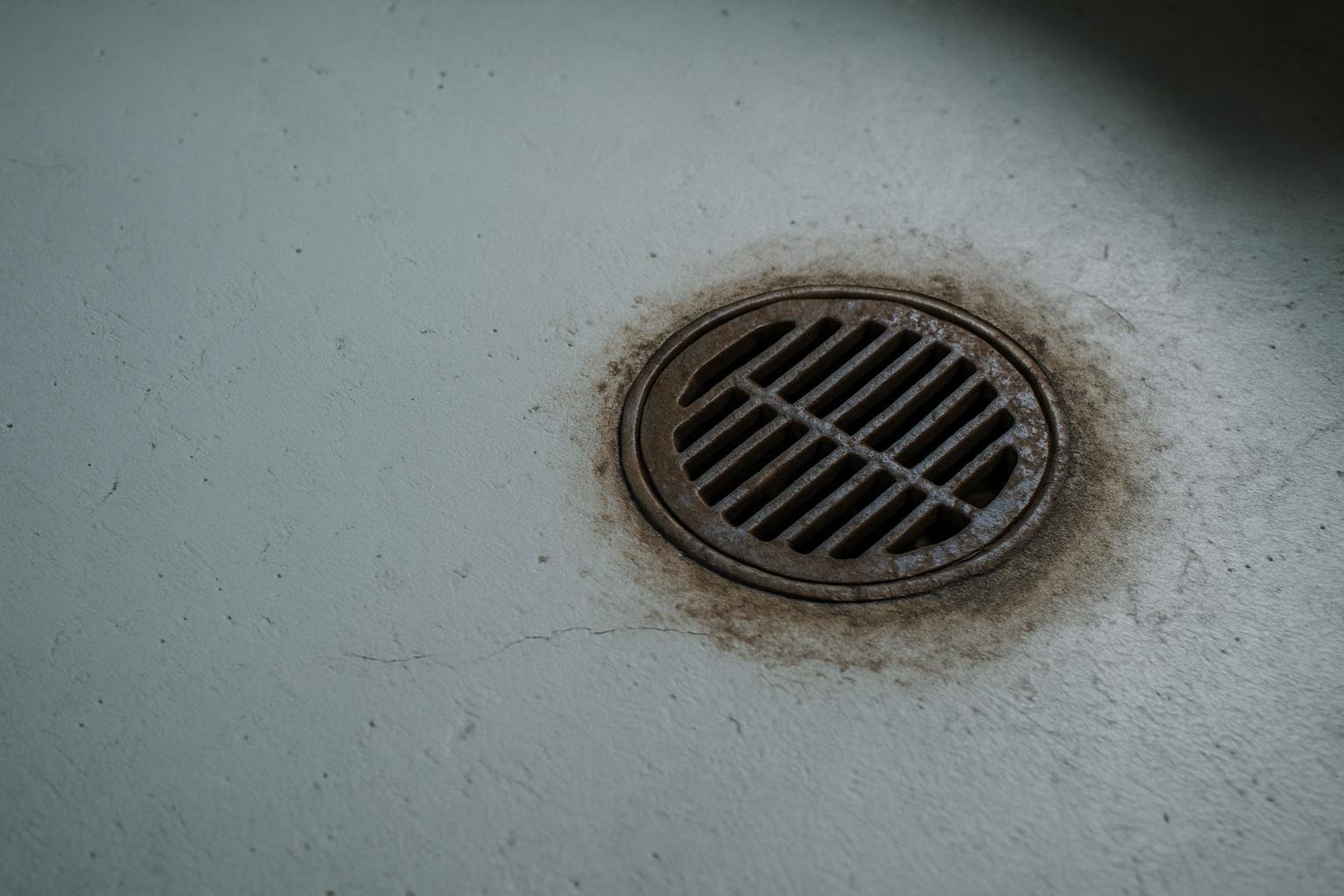
WEP publishes its own prevention list and almost none of it needs a contractor. Keep fats, oils, grease and wipes out of the drain, because a line that blocks repeatedly will keep on blocking whatever anybody installs in it. Check whether a sump pump, a roof drain or a gutter has been wrongly connected to the sanitary sewer. Eliminate or redirect a basement sewer connection you do not need. Plug a basement floor drain that connects to the sanitary sewer, or fit a one-way device to it. Only the last item on its list, having a licensed plumber install a backwater valve, needs a trade. If your drains are slow rather than blocked and the kitchen sink has been treated as a trash can for twenty years, the habit is the repair, and we would rather tell you that than sell you a visit.
When it is worth having somebody look
Three signals, and any one of them is enough. More than one fixture slow at the same time on different levels of the house, which points past the branch lines to the lateral. A basement floor drain that rises when the washing machine empties, which is the same signal in a louder voice. And a line that blocks again within a few months of being cleared, which usually means something structural is holding the deposits rather than the deposits arriving unusually fast. At that point another clearance is paying repeatedly for a symptom, and a camera survey is the cheaper decision. Tell us which of the three you have and roughly when the house was built, and we will put you in front of licensed, insured contractors who establish what is in the pipe before they quote for touching it.
Sources used in this guide
The EPA's own analysis of sanitary sewer overflows states that more than 70 percent of the overflows studied were attributed to line or main breaks or to line blockages, that most breaks were reported in old pipes, and that of the line blockages reported the most common cause was buildup of oil and grease with tree root intrusion the second most important cause. It adds that systems not routinely cleaned and repaired experience more frequent clogged and collapsed lines from root growth and from accumulated debris, sediment, oil and grease.
Source: US Environmental Protection Agency, Sanitary Sewer Overflows case study, accessed 2026-09-08
WEP states that plumbing and wastewater systems are designed to handle only human waste and toilet paper, and lists as unflushables all wipes including baby, personal care and cleaning wipes, plus cotton balls, cotton swabs, dental floss, hair, tissues, paper towels, sanitary products, diapers, cat litter and animal waste. It explains that these items collect in pipes on soapy build-up and deposits of fats, oils and grease, leading to sewer blockages and wastewater back-ups.
Source: Onondaga County Department of Water Environment Protection, accessed 2026-09-08
The EPA lists the causes of sanitary sewer overflows as inappropriate materials sent to the sewers including fats, oils and grease and products marked flushable such as baby wipes and sanitary pads; tree roots entering through defects or openings in a sewer line; leaky sewers admitting stormwater, groundwater and snowmelt through cracks and faults; inappropriate connections of sump pumps, roof leaders, foundation drains and area drains; improper or inadequate maintenance and cleaning; inadequate pump maintenance; undersized sewers and pumps; and equipment failures and breaks. It also states that where basements flood with sewage the damaged area must be thoroughly cleaned and disinfected and that rugs, curtains, flooring, wallboard and upholstered furniture that contact sewage usually must be replaced.
Source: US Environmental Protection Agency, National Pollutant Discharge Elimination System, accessed 2026-09-08
WEP states that tree roots are naturally inclined to grow toward moisture and that a sewer line gives them all the moisture they need, that roots can intrude and then continue to grow and multiply until they clog the sewer pipe, and that they can eventually crack it. The department's advice is to be mindful of where the sewer line runs before planting.
Source: Onondaga County Department of Water Environment Protection, accessed 2026-09-08
The USDA Forest Service found tree cover in Syracuse averaging 26.6 percent across the city's neighborhood planning areas, with an estimated 890,000 trees on public and private land. A complete inventory counted 34,165 street trees, of which Norway maple was 24.3 percent, honeylocust 9.3 percent, silver maple 8.9 percent, crabapple 6.1 percent and littleleaf linden 5.4 percent. The city's stated goal was to reach 30 percent canopy.
Source: US Department of Agriculture Forest Service, Northeastern Research Station, General Technical Report NE-287, Syracuse Urban Forest Master Plan, accessed 2026-09-08
Share of housing built before 1950 in the cities, villages and census designated places of Onondaga County: East Syracuse village 62.1 percent, Skaneateles village 61.2, Liverpool village 60.4, Solvay village 53.6, Syracuse city 51.4, Marcellus village 48.2, Camillus village 41.5, Lyncourt 39.5, Mattydale 37.2, Westvale 28.1, Fayetteville village 24.6, Baldwinsville village 24.0, North Syracuse village 22.0, Galeville 21.4, Minoa village 20.9, Brewerton 15.5, DeWitt hamlet 14.6, Manlius village 12.5, Fairmount 8.8, Radisson 6.9, Village Green 5.4 and Seneca Knolls 2.2.
Source: US Census Bureau, American Community Survey 2020-2024 5-year, table B25034, accessed 2026-09-08
Village of Fayetteville Code section 133-13 specifies cast-iron soil pipe to ASTM A74-42 extra-heavy weight or equal for the building sewer, permits Transite or equal asbestos-cement building sewer pipe if the Superintendent approves it, and states that cast iron pipe with leaded joints may be required by the Superintendent where the building sewer is exposed to damage by tree roots. Section 133-14 sets a minimum inside diameter of four inches at a slope of not less than a quarter inch per foot, and section 133-17 prohibits connecting roof downspouts, exterior foundation drains or areaway drains to a building sewer.
Source: Village of Fayetteville Code Chapter 133, Sewers, accessed 2026-09-08
The City of Ann Arbor's building department describes Orangeburg as the brand name of a bituminous fiber pipe made from plant-based fibers and asbestos soaked in a tar-like substance, manufactured to ASTM D-1861 for homogeneous pipe and ASTM D-1862 for the laminated wall version, and states that bituminous fiber piping systems have experienced numerous failures over the years with many needing complete replacement. It puts the usage window at roughly the early 1950s to the early 1970s, with reports of it in homes as early as 1949, and notes that no municipal record identifies which houses have it. It lists a video scan of the line as a way to identify it and warns that inserting a rooter, snake or mechanical cutter may yield clues but may also further damage the pipe.
Source: City of Ann Arbor, Building, Rental and Inspection Services, accessed 2026-09-08
WEP names three causes of basement backups: blockages in the sewer line, inflow during heavy rainfall overwhelming the sewer system, and tree roots infiltrating sewer pipes. Its published prevention steps are to keep fats, oils, grease and wipes out of the drain, to check for sump pumps, roof drains and gutters wrongly connected to the sanitary sewer, to eliminate or redirect an unneeded basement sewer connection, to plug or fit a one-way device to a basement floor drain that connects to the sanitary sewer, and to have a licensed plumber install a backwater valve, which must be inspected and cleaned regularly. The department warns that while a backwater valve is holding back a surcharge it is also stopping flow from leaving the house.
Source: Onondaga County Department of Water Environment Protection, accessed 2026-09-08
Services this guide relates to
Need someone to look at it?
Send the details and we will come back to you.