
Clogged and Slow Drain Cleaning in Fayetteville Village
A drain that empties but leaves solids behind is not blocked, it is badly graded, and Fayetteville's own code puts a number on the fall a building sewer is meant to have.
Drain Cleaning quote in Fayetteville
Share a few details so we can confirm coverage and arrange the right next step.
Would you rather talk it through? Call (315) 640-3590, answered 24/7.
$100 off your first job
Credited by us on your first booked job.
- One credit per customer per property, on your first booked job.
- Valid through December 31, 2026.
Mention this offer when you book. Full terms.
Repeat blockage, and what a Fayetteville code clause explains
Weigh the pattern before the price. A fixture that blocks once has met something. A fixture that blocks every few months, with nothing dramatic going down it, is usually being let down by grade or by a fitting, and cabling it again is buying the same afternoon repeatedly. Weigh the input too, since the county's unflushables list runs from every kind of wipe through cotton swabs, dental floss, hair, tissues, paper towels and cat litter, and explains that they collect on soapy build-up and on deposits of fats, oils and grease. And if anything collecting rain is plumbed into your building sewer, the village code says it should not be there.
A quarter inch per foot is the village figure
Section 133-14 sets four inches inside diameter at not less than a quarter inch per foot of fall. A run that has settled below that empties water and strands solids, which reads as a mystery blockage.
Rainwater has no business in a building sewer
Section 133-17 prohibits connecting roof downspouts, exterior foundation drains or areaway drains to a building sewer. Finding one is both an explanation and a code problem to correct.
Repeats are a survey, not a fourth cable
Three visits to the same fixture cost more than looking at it once. A camera down the branch is how a grade problem stops being invisible.
Sections 133-14 and 133-17, and what they explain
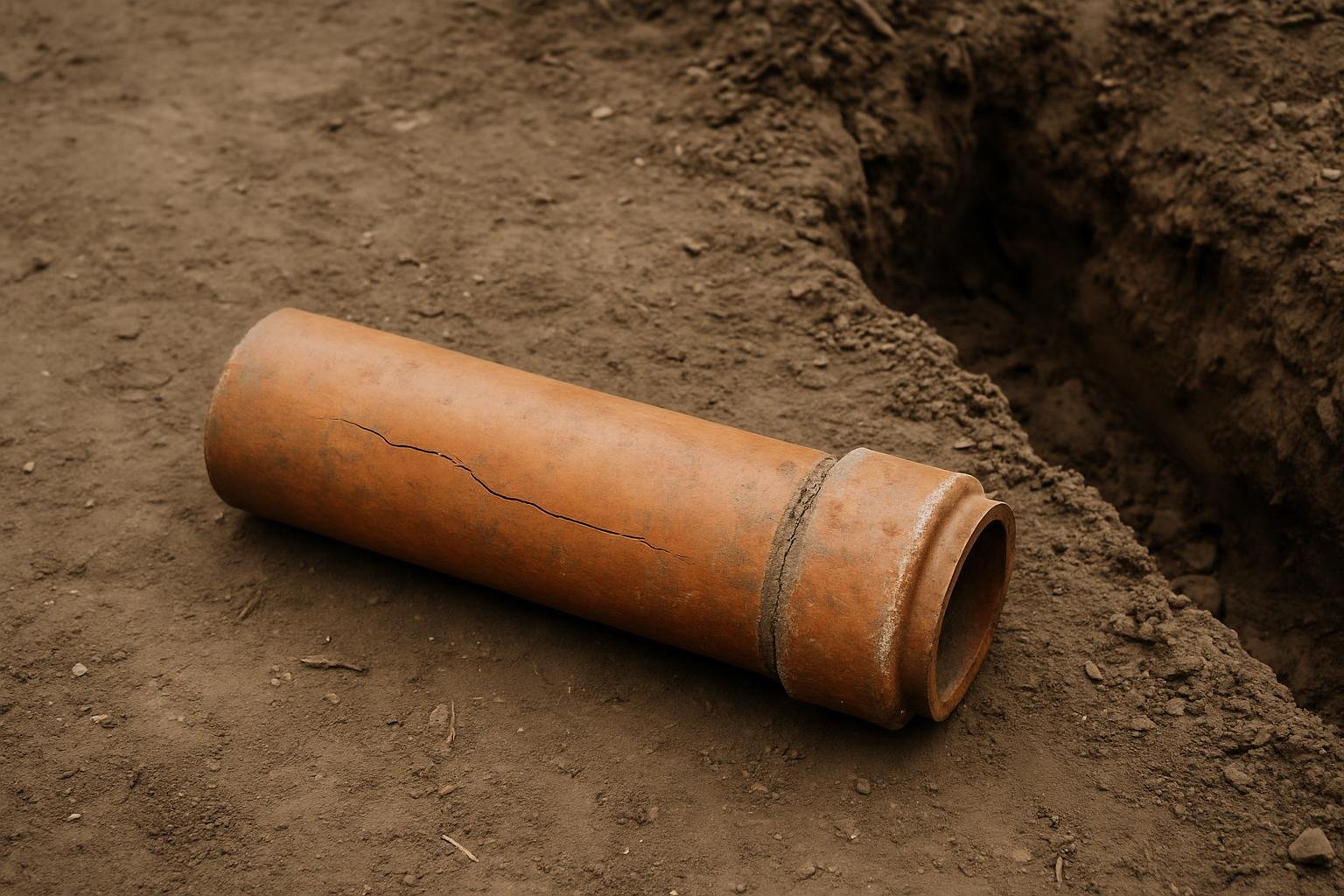
Village of Fayetteville Code section 133-13 specifies cast-iron soil pipe to ASTM A74-42 extra-heavy weight or equal for the building sewer, permits Transite or equal asbestos-cement building sewer pipe if the Superintendent approves it, and states that cast iron pipe with leaded joints may be required by the Superintendent where the building sewer is exposed to damage by tree roots. Section 133-14 sets a minimum inside diameter of four inches at a slope of not less than a quarter inch per foot, and section 133-17 prohibits connecting roof downspouts, exterior foundation drains or areaway drains to a building sewer.
Source: Village of Fayetteville Code Chapter 133, Sewers, accessed 2026-09-08
WEP states that plumbing and wastewater systems are designed to handle only human waste and toilet paper, and lists as unflushables all wipes including baby, personal care and cleaning wipes, plus cotton balls, cotton swabs, dental floss, hair, tissues, paper towels, sanitary products, diapers, cat litter and animal waste. It explains that these items collect in pipes on soapy build-up and deposits of fats, oils and grease, leading to sewer blockages and wastewater back-ups.
Source: Onondaga County Department of Water Environment Protection, accessed 2026-09-08
Fayetteville, North Syracuse and East Syracuse all require a separate and independent building sewer for every building, with a narrow exception where one building stands at the rear of another on an interior lot and no separate route exists, in which case the front building's sewer is extended and the whole run is treated as one building sewer. Fayetteville adds that a multiple-dwelling structure needs at least one separate building sewer for every group of six or fewer family dwelling units unless the county Division of Drainage and Sanitation agrees otherwise.
Source: Village of Fayetteville Code section 133-11; Village of North Syracuse Code section 197-13; Village of East Syracuse Code section 277-5B, accessed 2026-09-08
What drain cleaning involves
Fall, not blockage: the Fayetteville code number worth knowing
Some slow drains are not carrying anything at all. Village code section 133-14 sets a minimum inside diameter of four inches for a building sewer at a slope of not less than a quarter inch per foot, and a run that has settled below that carries water fine while leaving solids behind, which produces a fixture that blocks repeatedly for no visible reason. Section 133-17 is worth reading alongside it, because it prohibits connecting roof downspouts, exterior foundation drains or areaway drains to a building sewer at all. Between them those two clauses explain a large share of the repeat calls in this village.
Blocked again in the same place?
Tell us how often and we will say whether this is a cleaning or a grade problem you keep paying for.
What Fayetteville owners ask about a drain that keeps blocking
Why does the same Fayetteville drain keep blocking?
Very often because it does not have enough fall. The village sets a minimum of a quarter inch per foot on a four inch building sewer, and a run that has sagged below that will carry liquid away while leaving solids sitting in the low spot, which then catches everything that follows. Nothing about that shows up as a dramatic blockage until it stops the fixture.
Can my downspout be connected to the drain in Fayetteville?
No. Section 133-17 of the village code prohibits connecting roof downspouts, exterior foundation drains or areaway drains to a building sewer. Beyond the code point, it is also a practical one: rainwater arriving in the sanitary line uses the capacity your fixtures need, which is exactly what the county is trying to reduce in this basin.
Tell us which Fayetteville drain keeps failing
Send your ZIP code and what you are seeing. There is no obligation, and we will say what would actually end it.