
Sewer Line Cleaning and Root Removal on Syracuse City Laterals
We open the full bore of the lateral and record where the blockage actually sat, because inside the city that one distance decides whether the bill is yours or the City's.
Sewer Line Cleaning quote in Syracuse
Share a few details so we can confirm coverage and arrange the right next step.
Would you rather talk it through? Call (315) 640-3590, answered 24/7.
$100 off your first job
Credited by us on your first booked job.
- One credit per customer per property, on your first booked job.
- Valid through December 31, 2026.
Mention this offer when you book. Full terms.
Curb line, canopy and what actually blocks a city lateral
Section 5.3 A.3 of the Onondaga County Examining Board for Plumbers requirements states that all sewer lateral repairs shall be reconstructed to the curb line or edge of pavement, and that if the licensed plumbing contractor determines there is an obstruction within the service lateral that cannot be cleared and the obstruction is under the street bed, it is the plumber's responsibility to contact the City sewer department and demonstrate the same.
Source: Onondaga County Examining Board for Plumbers, Requirements for Implementation of the New York State Fire Prevention and Building Code, accessed 2026-09-08
The USDA Forest Service found tree cover in Syracuse averaging 26.6 percent across the city's neighborhood planning areas, with an estimated 890,000 trees on public and private land. A complete inventory counted 34,165 street trees, of which Norway maple was 24.3 percent, honeylocust 9.3 percent, silver maple 8.9 percent, crabapple 6.1 percent and littleleaf linden 5.4 percent. The city's stated goal was to reach 30 percent canopy.
Source: US Department of Agriculture Forest Service, Northeastern Research Station, General Technical Report NE-287, Syracuse Urban Forest Master Plan, accessed 2026-09-08
WEP states that tree roots are naturally inclined to grow toward moisture and that a sewer line gives them all the moisture they need, that roots can intrude and then continue to grow and multiply until they clog the sewer pipe, and that they can eventually crack it. The department's advice is to be mindful of where the sewer line runs before planting.
Source: Onondaga County Department of Water Environment Protection, accessed 2026-09-08
The EPA's own analysis of sanitary sewer overflows states that more than 70 percent of the overflows studied were attributed to line or main breaks or to line blockages, that most breaks were reported in old pipes, and that of the line blockages reported the most common cause was buildup of oil and grease with tree root intrusion the second most important cause. It adds that systems not routinely cleaned and repaired experience more frequent clogged and collapsed lines from root growth and from accumulated debris, sediment, oil and grease.
Source: US Environmental Protection Agency, Sanitary Sewer Overflows case study, accessed 2026-09-08
The distance that decides who pays for a Syracuse lateral
When every drain slows at once the pipe worth clearing is the lateral, and the number worth keeping is not what came out of it but how far along the run it was. Section 5.3 A.3 of the county plumbing requirements has a sewer lateral repair reconstructed only as far as the curb line, and where a licensed plumbing contractor finds an obstruction in the lateral that cannot be cleared and it sits under the street bed, contacting the City sewer department and demonstrating it is that contractor's job rather than yours. A cleaning that logs footage hands you that argument. A cleaning that does not hands you the whole run.
What a city main line job should leave in your hands
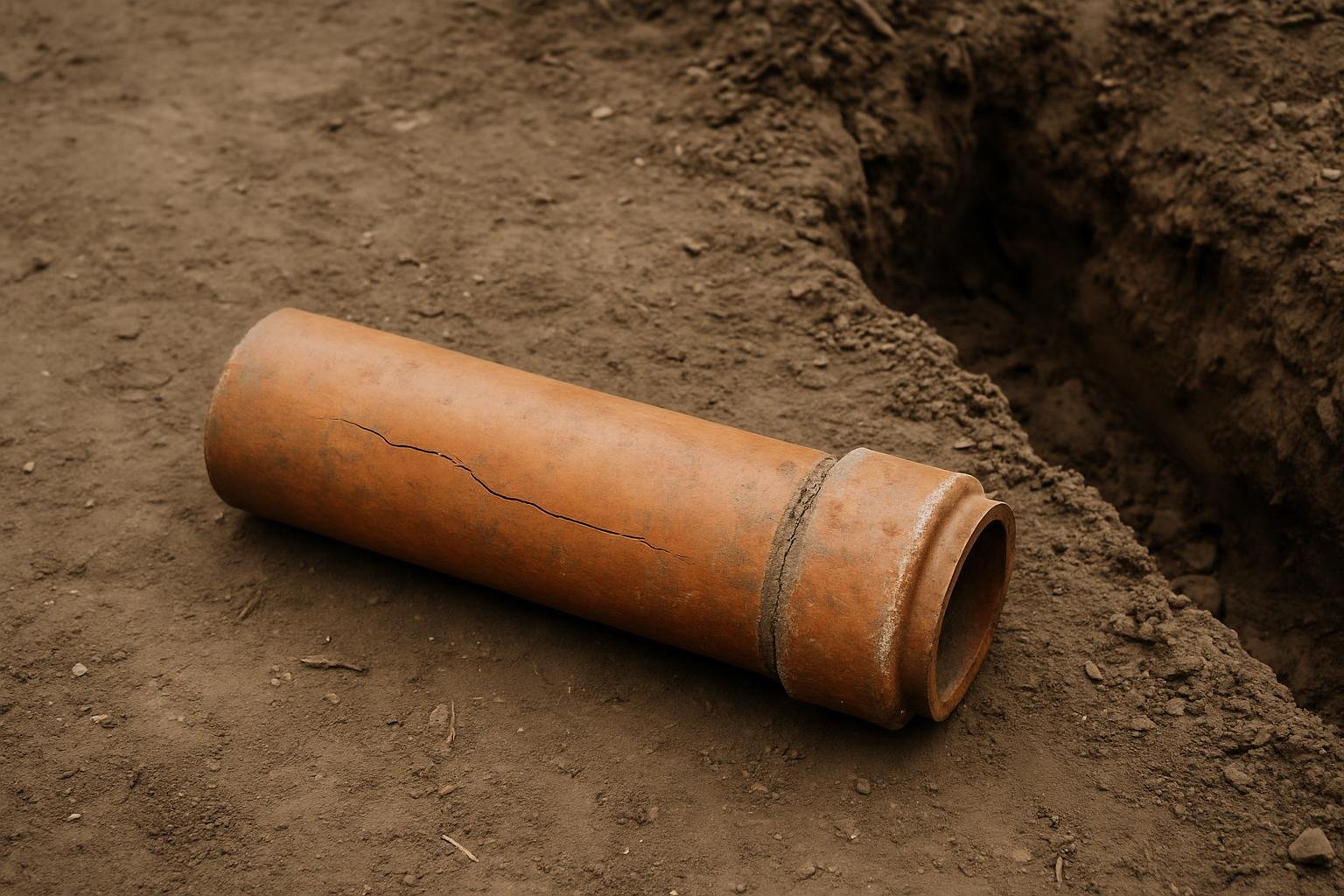
Weigh the record as carefully as the result. Ask before the machine goes in whether the footage to the obstruction will be written down and whether a camera confirms the bore afterward, because those two things are what convert a cleared line into an argument about ownership later. Then weigh the cause. Roots get the blame on a city lot and they are certainly close by, with an estimated 890,000 trees in Syracuse and a street tree inventory of 34,165, but the EPA's overflow analysis puts buildup of oil and grease first among reported line blockages and root intrusion second.
Ask for the footage, not just the result
Clearing to the curb line is the county standard here. The distance from the house to the obstruction is what tells you whether it sat in your own run or under the street bed.
Grease usually arrives before the roots do
The EPA found that of reported line blockages the most common cause was buildup of oil and grease, with tree root intrusion second, and that most breaks were reported in old pipes.
A cut root is a symptom of a wet joint
The county describes roots growing toward moisture, finding it at a leaking joint, then multiplying until they clog the pipe. Cut them and leave the joint and you have set a timer, not fixed anything.
Whole house slow, not one sink?
Tell us how long it has been building and we will say what a lateral clean here should record on the day.
Other work we arrange on Syracuse laterals
What Syracuse owners ask before a cutting head goes in
Who pays if the blockage turns out to be under a Syracuse street?
The county requirements put that on the City once it is proven. A licensed plumbing contractor who finds an obstruction in the service lateral that cannot be cleared, and which sits under the street bed, is responsible for contacting the City sewer department and demonstrating it. The demonstration is the part to insist on before anyone talks about opening the road.
There are two big maples over my line. Does that mean roots are the cause?
It means roots are available. Norway maple alone is 24.3 percent of the 34,165 street trees counted in the city inventory. But roots enter at a defect, so what the camera should show is the joint they came through. If the pipe is sound, grease and wipes are the likelier finding and the cheaper one.
Tell us what the whole house is doing
Send your ZIP code and what you are seeing. There is no obligation, and if the fault points past the curb line we will say so.